
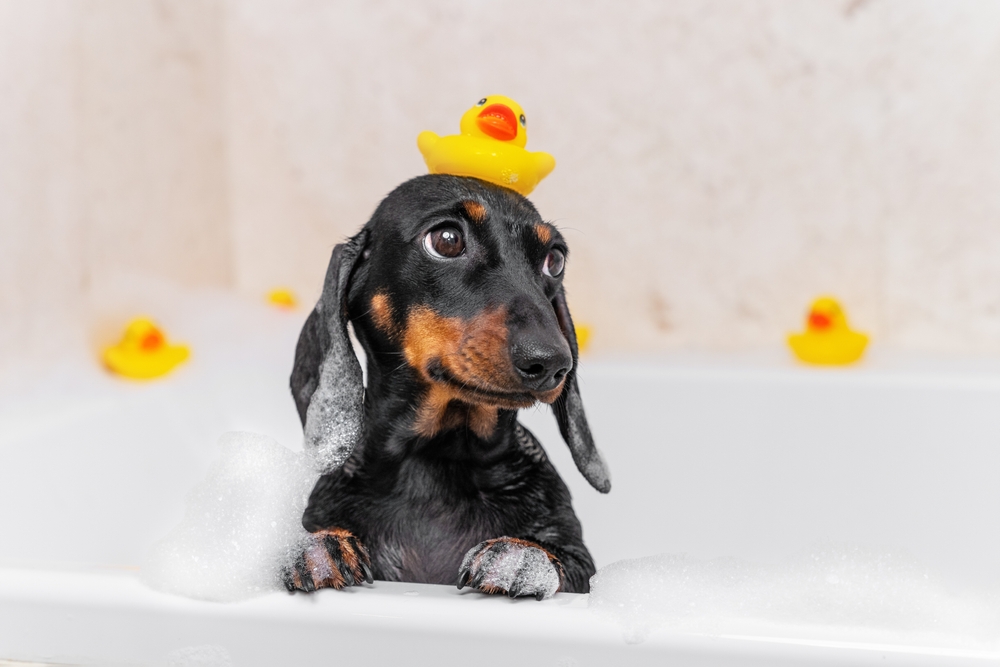
Owning a dog is a big responsibility, there are so many things to think about; when do they need to be toilet trained? How often should you walk them? How much do they eat? And how often should you bathe your dog? Bathing a dog is an important part of their care but it needs careful handling, after all their fur isn’t like human hair, so they don’t need their hair washing as regularly as we do as it could irritate their skin. They also have natural oils in their coat which helps keep them clean, and they’re pretty good at grooming themselves.
There are no set rules for bathing a dog, it can depend on the breed, the type of coat they have, the type of lifestyle you have with them and the time of year. But we’ve put together a rough guide to bathing your dog.
HOW OFTEN SHOULD YOU BATHE YOUR DOG?
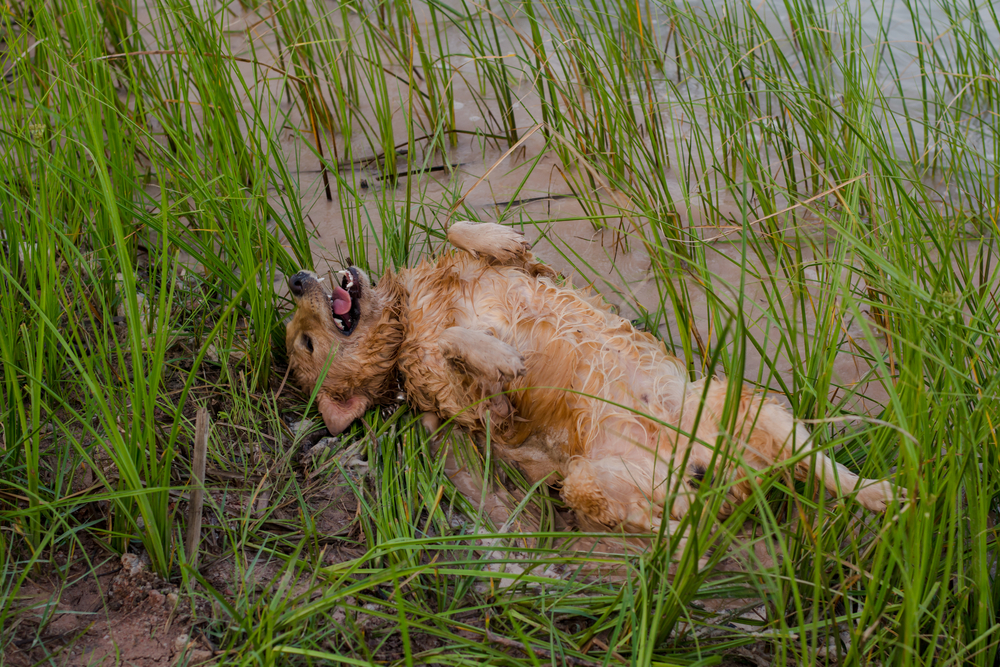
Dogs have sensitive skin and washing their fur too often can make it dry and even irritate their skin. But, as any dog owner knows, dogs have a habit of being able to sniff out the smelliest things to roll in. Found a bit of fox poo? Let me at it. A dead animal? Hold my coat. How about a bag of rubbish that’s spilling out everywhere?
There is no science behind this, some experts think it could be a way of masking their scent so they can go hunting without being detected, others think that dogs just really like strong odours; whatever the reason, the sooner it’s washed off your dog, the better, for everyone’s sake.
This means that there are no hard and fast rules for how often you should bathe your dog; some dogs may need bathing every couple of months, others just a few times a year. Generally, unless your dog is particularly smelly, or has a skin condition, they don’t need a bath until they’re really dirty and can be bathed once a month.
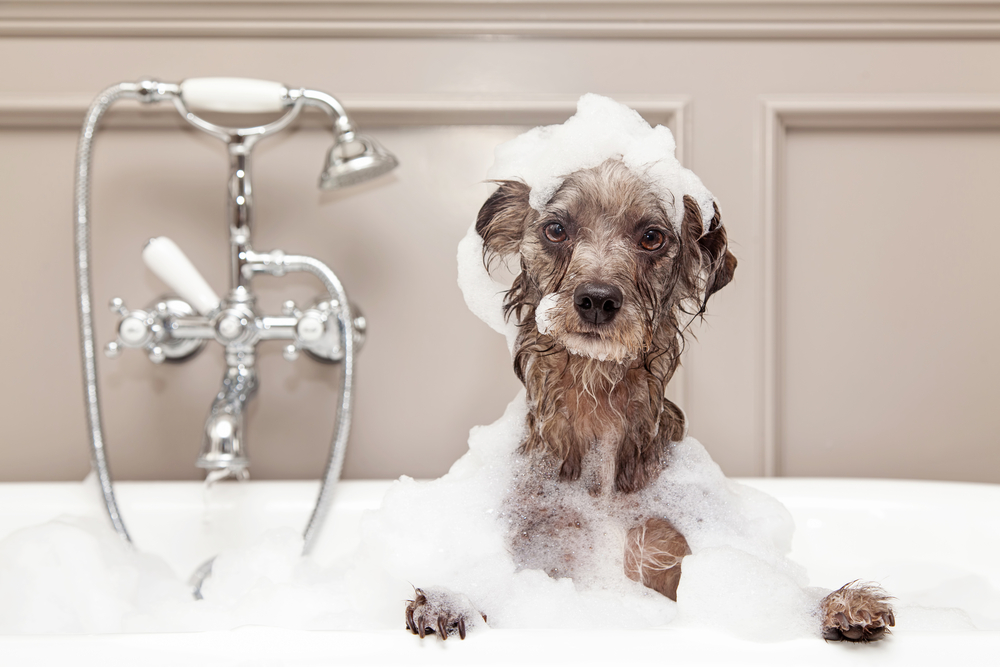
HOW DO I KNOW WHEN MY DOG NEEDS A BATH?
- When they smell! – this is a bit obvious, but a bad smell is the first indicator.
- Their coat looks greasy and dull – they may need grime and excess oil removing.
- They have visible dirt on their fur.
- They’re itchy – if your dog is constantly biting or scratching, they may just need a good bath.
- Excessive licking – as well as licking us, dogs lick themselves, but if they’re doing a lot more than usual then it could mean they have a lot of dirt in their fur.
- Smelly ears/paws – dirt, sweat and bacteria gather in these areas.
- Shedding a lot of fur – particularly with long-haired breeds. Regular washing with conditioner can keep them clean and keep their fur healthy.
- Skin irritation – look out for any redness, bumps or flakiness.
HOW DO YOU BATHE A DOG?
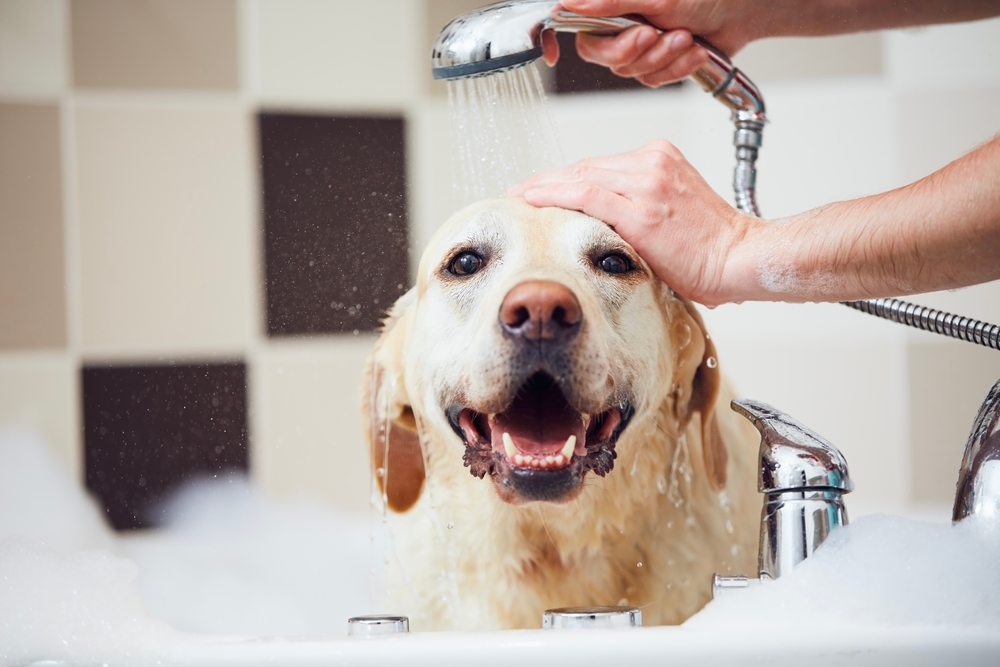
- Have everything ready; including shampoo/conditioner etc, brushes if needed and a collar that you don’t mind getting wet, so you can hold onto them. A non-slip bath mat might help your dog feel more secure. And plenty of towels!
- Lift your dog into the bath/shower.
- Test the water, it needs to be lukewarm, not hot.
- Shower your dog making sure to avoid the eyes, ears, nose and mouth.
- Shampoo them gently, again avoiding the face.
- Rinse the shampoo off, then gently squeeze excess water from their fur.
- Gently dry them with a towel before lifting them out. On a warm, dry day they can dry off naturally outside – one of the first things they’ll do when you take them out of the bath/shower is have a big shake – but otherwise, a hair-dryer on a low heat/speed will do the job. Gently brush your fingers through their fur while you dry them.
Remember to reassure them while you bathe them and give them lots of praise and treats. And always stop if they seem distressed.
WHAT PRODUCTS CAN YOU USE WHEN BATHING A DOG?
Don’t use human shampoo, it’s best to use special dog shampoo, or, if you haven’t got any, a very mild baby shampoo. You can ask your vet for advice about the best ones to use.
IS IT OKAY TO BATHE YOUR DOG ONCE A WEEK?
The short answer is no. Vets and dog groomers say too many baths can strip away their natural oils and cause dryness and irritation, so it is possible to bath a dog too often.
BATH TRAINING
Some dogs get nervous when faced with having a bath, so it might help to have someone with you to distract them and reward them, as well as helping to lift them in and out if they’re big dogs. If your dog seems a bit panicky or anxious, you could try a few things to make it a more relaxed, fun experience for everybody:
- Take them into the bathroom with you a few times so they’re familiar with the room. Bathrooms can have a different feel to the rest of the house; they’re often not carpeted and have no soft furnishings, so the acoustics are different.
- Once they’re used to the bathroom you could have the shower on in the background.
- Don’t go straight in with the showerhead as soon as they’re in, run it over their paws first, then work up their body, up their legs etc, avoiding their faces.
- Start training them when they’re young, when you’re socialising them, with lots of praise and rewards so that they see it as a positive experience.
THINGS TO CONSIDER
- Breed
Generally, the larger the dog and the longer their coat, the more care they’ll need, but this doesn’t necessarily mean bathing, they could just need brushing more often. All dogs are different, with different needs; for example, a short-haired breed has less hair to trap dirt in, but this may mean their skin gets dirty quicker, so they’ll need bathing more often. Double-coated breeds have a dense layer underneath that repels dirt and keeps the skin clean, so they may need more brushing than bathing.
- Age
Puppies seem to be particularly good at finding dirty, smelly things to roll in so may need more baths, but senior dogs often have trouble grooming themselves or may have medical issues which mean they need bathing more often.
- Season
The time of year can affect how often a dog needs bathing; warmer, wet months can result in greasy hair and parasites, such as fleas and ticks, could be more common, while dry, itchy skin can be more of an issue on the colder months.
- Activity
Dogs who spend a lot of time outdoors may need more baths, while dogs who swim a lot might just need to be rinsed in fresh water.
- Shedding
For dogs who shed, bathing can help remove loose hair.
- Skin conditions
Dogs with allergies or skin problems may need more regular baths with a special shampoo. It’s important to consult your vet as with some dogs frequent bathing can help, while with others it may make irritation worse.
HOW ABOUT IN BETWEEN BATHS?
However often you bathe your dog, they still need regular brushing – this removes loose hair and helps get rid of dirt; it also helps spread the skin’s natural oils throughout their fur. It’s also a nice way to bond with your dog.
As you’ve seen, all dogs are different when it comes to how often you should bathe them, but a rough guide is to give your dog a bath every one to three months, depending on their specific needs. If you’re not sure, ask your vet or a professional groomer.
Just as our dogs rely on us to keep them clean, they also rely on us to keep them safe and healthy, but we can’t always predict the future. One way to give ourselves a little bit of peace of mind is to look at dog insurance. Whether your dog gets ill or is injured, runs away or is stolen, our policies can be tailored to suit you, your dog and your budget. Give us a call, or go online for a free, no-strings quote today.
All content provided on this blog is for informational purposes only. We make no representations as to the accuracy or completeness of any information on this site or found by following any link on this site. We will not be liable for any errors or omissions in this information nor for the availability of this information. We will not be liable for any loss, injury, or damage arising from the display or use of this information. This policy is subject to change at any time.
We offer a variety of cover levels, so please check the policy cover suits your needs before purchasing. For your protection, please ensure you read the Insurance Product Information Document (IPID) and policy wording, for information on policy exclusions and limitations.