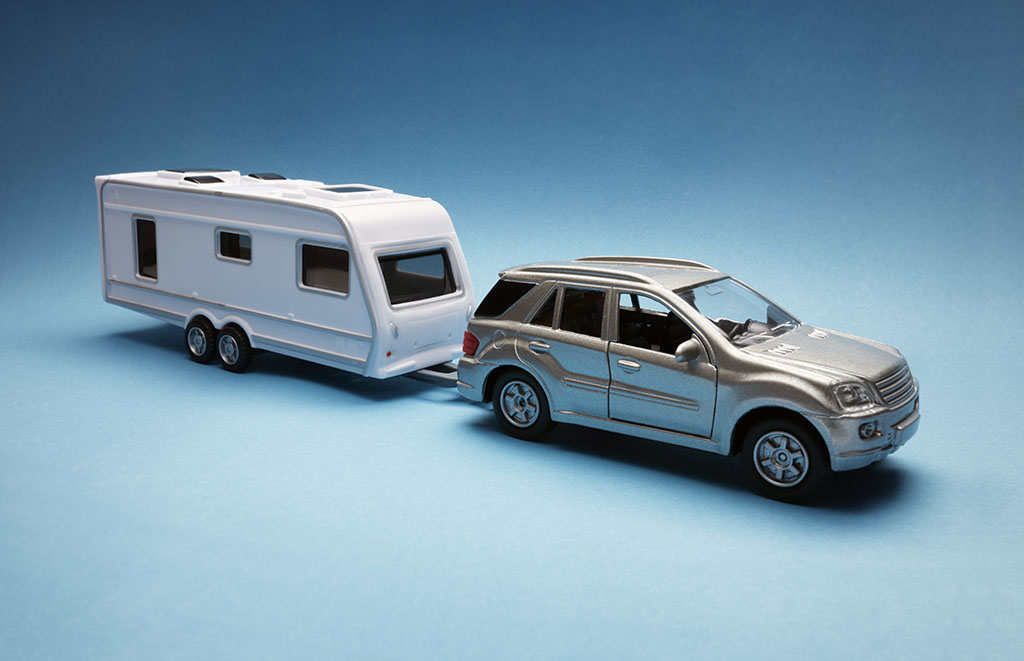
If you’re new to caravanning, towing your caravan for the first time can feel quite daunting; between understanding weight limits, checking your licence rules and making sure everything is safely connected, there’s quite a lot to think about before you set off.
The good news is that once you understand the basics, towing a caravan can become second nature. A little preparation, the right equipment, and knowing the rules of the road can make all the difference.
In this guide, we’ll walk you through everything you need to know about towing a caravan safely and legally in the UK, from checking whether your car can tow your caravan, to loading it properly and handling it confidently on the road.
CAN MY CAR TOW A CARAVAN?
Before hitching up and heading off on your next adventure, it’s important to make sure your vehicle is capable of towing your caravan safely, as exceeding the limits can affect both safety and legality.
TOWING CAPACITY
Every vehicle has a maximum towing capacity, which is the heaviest weight it can safely tow.
You’ll usually find this information in:
- Your vehicle handbook
- The manufacturer’s website
- The vehicle’s VIN (Vehicle Identification Number) plate
KERB WEIGHT
Kerb weight is the weight of your car when it’s ready to drive, but without any passengers or luggage. The relationship between the car’s weight and the caravan’s weight plays a big role in how stable you feel on the road; if the caravan is too heavy compared to the tow car, it can make the vehicle harder to control, particularly at higher speeds or in windy conditions.
That’s why experienced caravanners often recommend the 85% guideline as a good starting point; this recommends that the caravan’s loaded weight should not exceed around 85% of the car’s kerb weight. While this isn’t a legal rule, it’s widely recommended for better stability and control, especially for less experienced towers.
WHAT ABOUT GROSS VEHICLE WEIGHT (GVW) AND GROSS TRAIN WEIGHT (GTW)?
Gross Vehicle Weight (GVW) – This is the maximum weight your car can legally weigh once it’s fully loaded with passengers, luggage, and fuel.
Gross Train Weight (GTW) – This is the combined maximum weight of the car and the caravan together.
Both of these figures are important because exceeding them could mean you’re driving illegally and potentially unsafely.
MAXIMUM AUTHORISED MASS (MAM) AND MTPLMM
You’ll might see the term Maximum Technically Permissible Laden Mass (MTPLM); this is the caravan equivalent of GVW (Gross Vehicle weight) – the maximum weight your caravan can weigh once it’s fully loaded. Another similar term you might see is Maximum Authorised Mass (MAM), which refers to the legal maximum weight of a vehicle or trailer when fully loaded.
NOSE WEIGHT
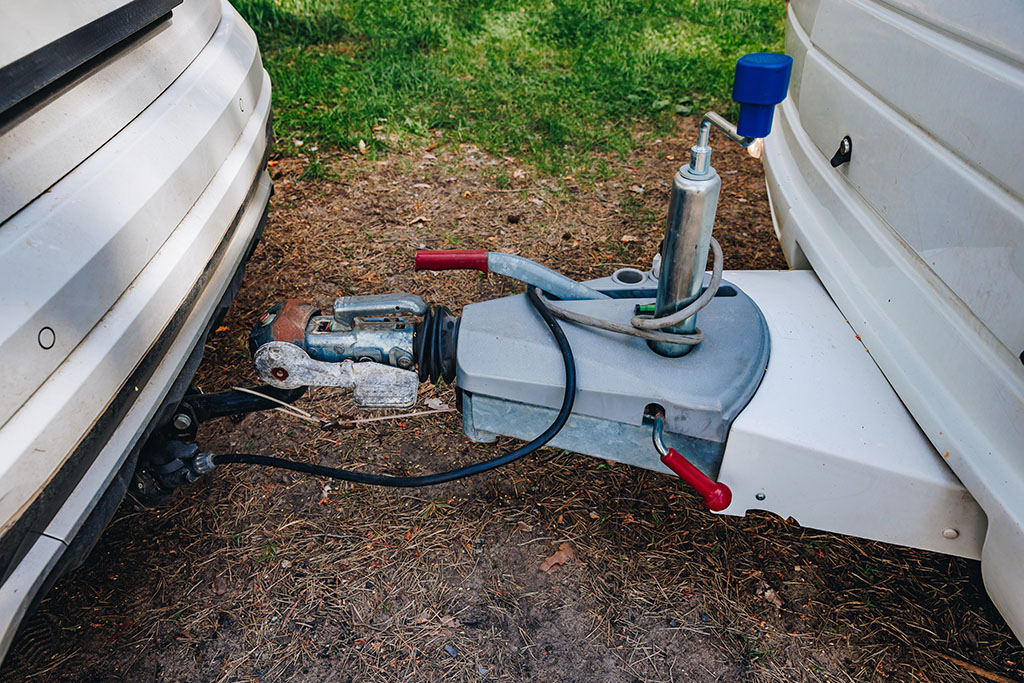
Nose weight refers to the downward force that the caravan’s hitch applies to the tow ball; Too little nose weight can make the caravan unstable, while too much could exceed the limits of your vehicle or tow bar. You can measure nose weight using a nose weight gauge, and most manufacturers recommend keeping it within a specific range for safe towing.
VIN PLATE
The VIN plate on your car has important information about its legal weight limits and it’s usually found under the bonnet or inside the driver’s door frame.
On the plate you’ll normally see:
- Gross Vehicle Weight
- Gross Train Weight
- Maximum front axle weight
- Maximum rear axle weight
CAN YOU TOW A CARAVAN WITH AN AUTOMATIC CAR?
Yes, automatic cars are perfectly capable of towing a caravan and some can make towing easier because they handle gear changes smoothly and reduce driver workload. The key is still to check the vehicle’s official towing capacity before hitching up.
WHAT ABOUT ELECTRIC CARS?
Electric vehicles are becoming increasingly popular, but it’s worth remembering that towing can have an effect on their driving range as pulling a caravan adds extra weight and drag, which may mean the battery drains faster than during normal driving.
Some electric cars are designed with towing in mind, but it’s always worth checking the manufacturer’s towing limits, and make sure you plan charging stops carefully if you’re heading out on a longer trip.
DRIVING LICENCE REQUIREMENTS FOR TOWING A CARAVAN
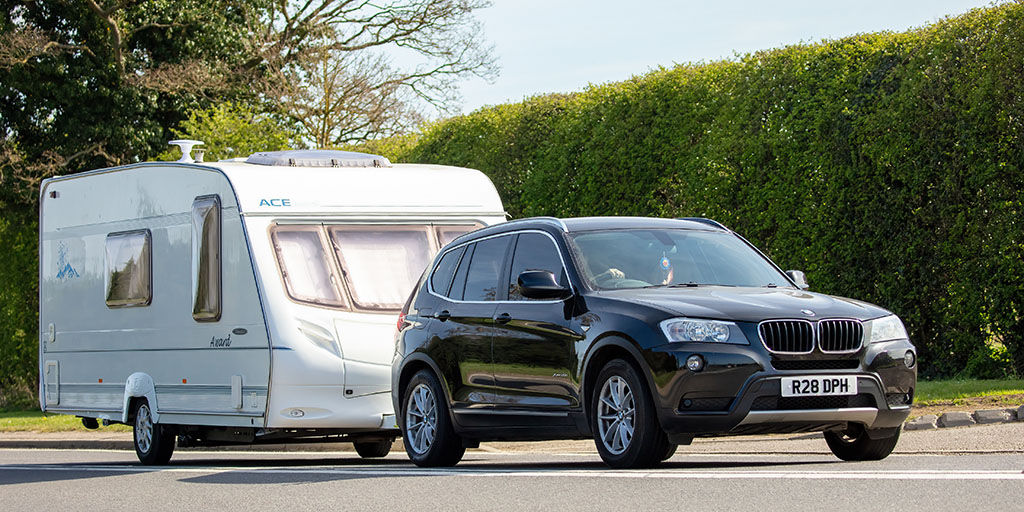
Before towing a caravan, it’s also important to make sure your driving licence covers it, most standard UK driving licences allow you to tow a caravan under certain conditions, but the exact rules depend on when you passed your driving test, as well as the weight of the vehicle and caravan combination.
In recent years, UK towing rules have been updated to make it easier for drivers to tow trailers and caravans; drivers with a standard category B licence can now tow heavier trailers than before, provided the vehicle is capable of doing so safely.
Previously, drivers who passed their test after 1997 needed to take an additional Category BE test to tow larger trailers. However, these rules have changed, and most drivers with a full car licence can now tow heavier combinations without taking an extra test, provided they stay within the vehicle’s limits.
You can always double-check the latest rules with the DVLA (Driver and Vehicle Licensing Agency) if you’re unsure.
ESSENTIAL EQUIPMENT FOR SAFETY AND STABILITY
- Breakaway cables – When you’re towing a caravan, you need to know that in the unlikely event that your caravan becomes unhitched (it’s worth noting that these incidents tend to happen just after moving off, because the caravan hasn’t been hitched properly), the brakes can still be applied and since 1982 it’s been a legal requirement that you have something in place. This is where a breakaway cable comes in – DVSA (Driver and Vehicle Standard Agency) guidelines state that the cable shouldn’t be worn or damaged, it should have enough slack so that the brakes aren’t activated by mistake and it shouldn’t drag along the ground when you’re driving.
- Towing mirrors – you need to have a good view of the road around you, so will need suitable towing mirrors if your caravan is wider than the rear of your car. If you don’t have proper towing mirrors you could be fined up to £1,000 and get three penalty points.
- Number plates – caravans should have a number plate that matches the registration of the vehicle towing it.
- Speed limits – the speed limits for when you’re towing a caravan are different to when you’re driving solo:
o On a motorway the limit is 60mph (unless there’s a temporary lower limit in place) and you’re not allowed in the outside lane if there are three lanes or more. If there are just two lanes you can use the outside lane for overtaking.
o On a dual carriageway, the maximum speed you’re allowed to drive while towing is 60mph.
o On a single carriageway, the speed limit for towing a caravan is 50mph, 30mph in built up areas, unless there are signs to indicate otherwise. - Towbars – these must be ‘type approved’ which means they meet EU regulations and are designed for your make of car. Type approved towbars will have a label with an approval number, and details of the vehicle it’s suitable for. (This doesn’t apply if your car was first used before 1st August 1998).
- Stabilisers – these prevent any unwanted movement from your caravan while it’s being towed, and while they’re not mandatory, they are recommended. They can make the difference between a small wobble, and something more serious, such as extreme snaking; this is when the caravan moves around the towing hitch axle and veers from side to side.
LOADING AND PRE-JOURNEY SAFETY CHECKS
Load distribution – this is important as the right distribution of weight means the load won’t move around during transit, so try to load heavy items first and position them low down and over the axle in the caravan, and as near to the rear axle as possible in the car. Load mid-weight items next, as low down as possible and spread them around evenly, then load lighter items, which are the only things that should be placed in any overhead cupboards.
Make sure everything is secure – including windows, doors and cupboard latches, and secure all loose items.
Check your tyres – tyre safety is important, so check the pressure regularly and give them a visual check too for damage such as cracks or worn treads.
Double check your packing – check you have all your camping essentials, including a first aid kit, chargers etc.
Check insurance – you can do all the prep in the world, but life on the road can take an unexpected turn so having insurance in place can really help give you peace of mind. We offer three policy types, that you can then add to with a choice of optional benefits. This way you get the insurance that suits you, without paying for what you don’t need. Give us a call or visit our dedicated touring caravan insurance page for more info or simply get a free, no-strings quote.
OTHER TIPS FOR TOWING A CARAVAN SAFELY
For your first few trips try to head out when the roads are quieter, this will help you gain confidence without the pressure of having other road users around you.
- Take care at junctions and allow yourself more time and room to manoeuvre, especially when going round corners.
- Put petrol in before you hitch your caravan.
- Practice reversing your caravan, again at a quieter time of day when you don’t feel under pressure. It’s a valuable skill that will become easier the more you do it. It’s a good idea to have someone with you to be your ‘spotter’.
- Remember that you can’t carry passengers in your caravan when you’re towing it.
- Remember Highway Code Rule 169 which states that you must not ‘hold up a long queue of traffic, especially if you are driving a large or slow-moving vehicle. Check your mirrors frequently, and if necessary, pull in where it is safe and let traffic pass.’
- Go on a caravan towing course, organisations such as the Caravan and Motorhome Club also offer tools and advice to help drivers check towing compatibility.
Towing a caravan can feel scary at first, but the more you do it, the easier it will be and the more confident you’ll feel. As with anything, the more preparation you do, and the slower you take it, the more comfortable you’ll be. Happy towing!
This blog is in no way sponsored, endorsed, administered by or affiliated with any brands or external websites mentioned in this content.
All content provided on this blog is for informational purposes only. We make no representations as to the accuracy or completeness of any information on this site or found by following any link on this site. We will not be liable for any errors or omissions in this information nor for the availability of this information. We will not be liable for any loss, injury, or damage arising from the display or use of this information. This policy is subject to change at any time.
We offer a variety of cover levels, so please check the policy cover suits your needs before purchasing. For your protection, please ensure you read the Insurance Product Information Document (IPID) and policy wording, for information on policy exclusions and limitations.