Table of contents
Whether hacking your horse on a road is your only option, or you need to use a road to get to an off-road route, safety is vital for both you and your horse, as well as other road users. There’s a common misconception that the Highway Code is just for drivers, but it applies to all road users, including horse riders.
It’s always worth familiarising yourself with the highway code so that you’re aware of any changes that have come into force that may affect you, but as a horse rider it’s even more important as you also have your horse to think about. However well trained a horse is, they can be unpredictable and their natural response to danger or fear is flight (or even kicking or rearing up) and they can be startled by sudden or unexpected noises just as we humans can be. They also have a wider range of hearing than we do; humans can hear frequencies up to 20kHz, horses can hear up to 33kHz so they may be more sensitive to noise than we are.
In 2024, there were 3,118 road accidents involving horses and sadly, 58 horses died, with a further 97 injured. 81% of incidents happen because the driver either passed too closely or too quickly.
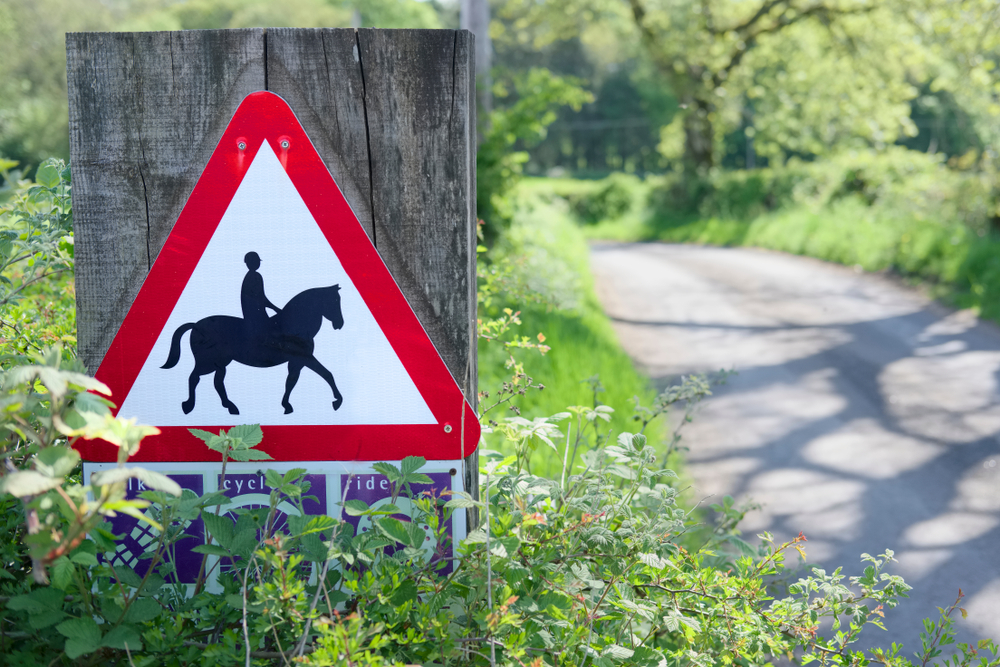
HOW DO THE MOST RECENT CHANGES AFFECT HORSE RIDERS?
In 2022 new changes came into force that affect the hierarchy of road users; Rules 204 – 225 state that the road users most at risk on the road are pedestrians – particularly children and older, or disabled people – horse riders, cyclists and motorcyclists. This means that ‘in any interaction between road users, those who can cause the greatest harm have the greatest responsibility to reduce the danger or threat they pose to others.’
We’re going to look at some of the other parts of the Highway Code that affect horse riders.
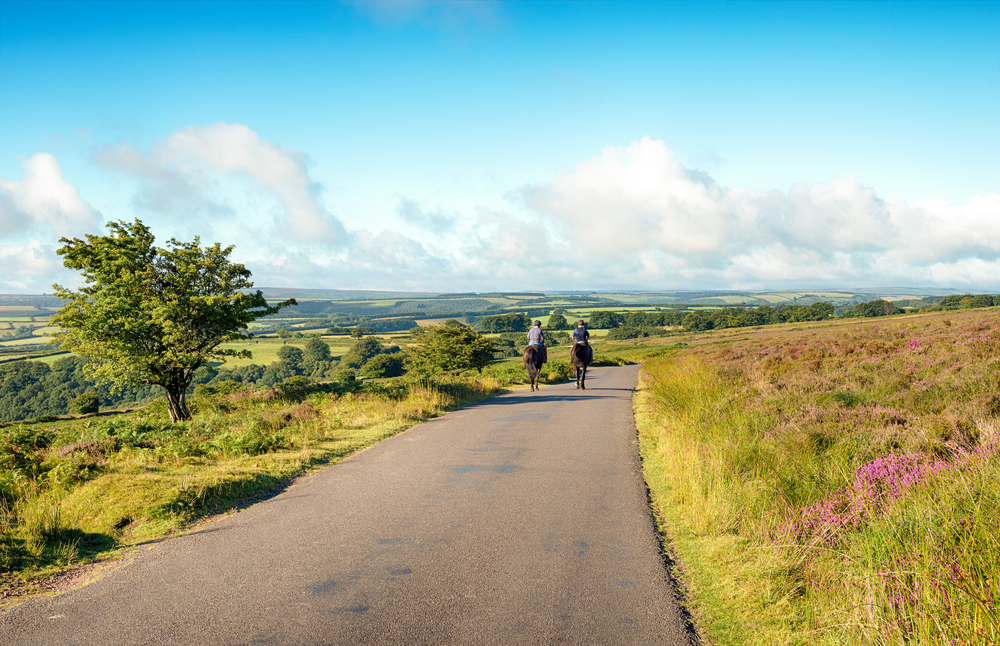
ROAD POSITION
Rule 213 of the Highway Code states that on narrow sections of road, horse riders can ride in the centre of the lane. This is so they can be seen, but also to allow them room to change direction if they need to avoid uneven road surfaces or obstacles in the road.
MANAGING ROUNDABOUTS AND JUNCTIONS
Rule 55 of the Highway Code recommends that you avoid roundabouts while on a horse, if possible, but if you do have to use one then the rules are similar to if you’re using a roundabout in a vehicle:
- Keep to the left and look out for vehicles crossing in front of you to leave/join the roundabout.
- When passing an exit make sure you signal right to show other road users that you’re not leaving the roundabout.
- Signal left when you leave.
When approaching a junction, be aware of your surroundings and signal clearly with your arm when you know it’s safe. You might have to wait for traffic to pass, so your horse needs to be able to stand still and wait without getting anxious or agitated.
While it’s legal to ride two abreast (but no more), you should try to ride single file on narrow or busy roads, or on a bend. Horse riders should also give way to pedestrians crossing (or waiting to cross) at a junction.
TACK
You shouldn’t ride on the road without both a saddle and a bridle and it’s important that tack fits well and is in good condition.

SAFETY
Make sure that you have the appropriate clothing and equipment with you, including:
- Hi-vis and reflective equipment, for both you and your horse; for example, a hi-vis tabard or jacket for the rider, and leg bands for the horse. You could also think about using LED lights. This will make sure you’re visible from all angles.
- Wear boots or hard soled shoes that can be used safely with stirrups.
- Children under the age of 14 must wear a well-fitted helmet, as stated in rule 49 of the Highway Code, that can be fastened securely. It’s recommended that older riders follow the same recommendations.
- It’s recommended that you don’t ride at night or in poor visibility, but if it’s unavoidable make yourself as visible as possible.
- Keep both hands on the reins unless you’re signalling.
- Keep both feet in the stirrups at all times.
- Similar to the ‘mirror-signal-manoeuvre’ guidance when driving, always look around you and give a clear arm signal before setting off/turning/stopping.
- Rule 54 states that you shouldn’t take your horse onto a footpath, pavement or cycle path and always follow directions to dismount, for example, at a level crossing.
- Be polite and thank anyone who’s made an effort to make it easier for you and your horse to be on the road. Often, motorists can see horse riders as an inconvenience, so a friendly wave/nod from you could mean that they’re more likely to be accommodating with the next rider they see.
- Think about taking the Ride Safe Award that’s run by the British Horse Society, particularly if you’re an inexperienced rider, or haven’t ridden for a while; it’s recognised in the Highway Code as best practice.

ADVICE FOR MOTORISTS IF THERE’S A HORSE ON THE ROAD
Rule 215 states that you should:
- Slow down – Always pass wide and slow with at least two metres of space between you and the horse, at a maximum speed of 10mph, and give them time to perform any manoeuvres.
- Be patient – Don’t rev your engine or sound your horn and only pass when it’s safe to do so.
Other tips for motorists:
- Be prepared to stop if you need to.
- Look out for, and respond correctly to, hand signals from horse riders.
- If the road narrows and there’s not enough room to pass safely from behind, wait/stop and let the horse rider find a safe place further up the road so that you can then pass them. If you’re meeting a horse head on on a narrow road, you may need to reverse.
The British Horse Society’s Dead Slow campaign is incorporated in the Highway Code and aims to teach drivers how to pass a horse safely.
DO HORSES HAVE RIGHT OF WAY ON ROADS OVER CARS?
As horse riders are classed as ‘vulnerable road users’ they have priority over cars when on the road.
Staying safe while out on the road, whether that’s in a car or on a horse, means you need to be aware of other road users and be mindful of their safety as much as your own, as well as being courteous. There are three different responses at play in this situation, the horse rider’s, the motorists, and the horse, and horses can be unpredictable, however well-trained they are.
However careful you are, horse riding isn’t without risks, so one way to have added peace of mind is to look at horse rider insurance and horse insurance both of which can be tailored to suit your needs. Take a look at the website, or give us a call and get a free, no-strings quote today.
This blog is in no way sponsored, endorsed, administered by or affiliated with any brands or external websites mentioned in this content.
All content provided on this blog is for informational purposes only. We make no representations as to the accuracy or completeness of any information on this site or found by following any link on this site. We will not be liable for any errors or omissions in this information nor for the availability of this information. We will not be liable for any loss, injury, or damage arising from the display or use of this information. This policy is subject to change at any time.
We offer a variety of cover levels, so please check the policy cover suits your needs before purchasing. For your protection, please ensure you read the Insurance Product Information Document (IPID) and policy wording, for information on policy exclusions and limitations.