It’s a bit of a stereotype that cats and dogs don’t get on; we were all brought up on cartoons that had cats and dogs as sworn enemies and we often compare cats and dogs; after all, they’re very different animals. Cats can be quite solitary creatures, while dogs are more sociable and were domesticated much earlier than cats. Cats are quite self-sufficient when it comes to grooming and exercise, while dogs need regular exercise and baths. Cats are associated with myths and legends, while dogs are more ‘what you see is what you get’. Dogs are pack animals whereas cats generally don’t get along with other cats, although they often find it easier to share their home with a different species – maybe because they’re less of a threat.
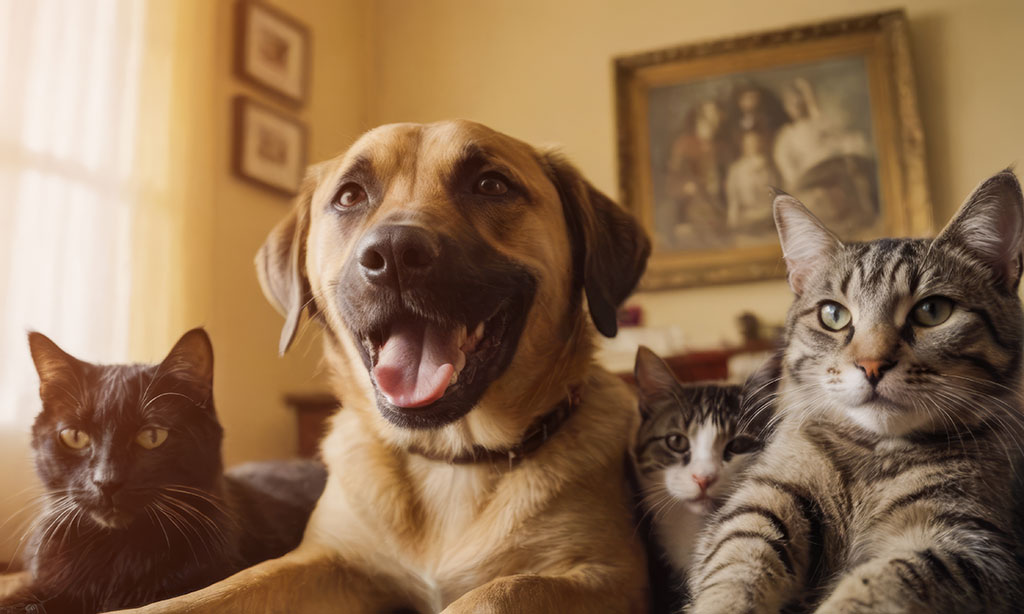
But despite the famous idiom ‘fighting like cats and dogs’, they can actually live very happily alongside each other, the key is for them to have positive experiences right from the start, and a well-managed introduction.
Let’s take a look at how you can make that introduction a little bit smoother.

BEFORE YOU INTRODUCE THEM
If you have a cat
Make a note of how they react when they see a dog, or if one passes the house. Are they confident or nervous? If you have a nervous cat, or one that already has health issues because of stress, then introducing a dog might increase that stress and make them ill, so you need to bear that in mind.
If you have a dog
How do they react when they see a cat while out and about, do they chase them, or ignore them? This could depend on the breed as some are more driven by their ‘prey drive’ than others, so if you’re going to have to keep them separate all the time, it might not be the best idea to have a cat too.
THINGS YOU CAN DO TO PREPARE
- It’s important that both pets have a separate ‘safe’ space where they can go if they feel overwhelmed. Cats like high places, or small spaces they can either squeeze into or under. A wall-mounted cat shelf, for example, will help them feel safe while letting them observe what’s going on down below.
- A spare room is ideal to let your cat settle in while they adjust to their new surroundings, it can have their food and water bowls as well as a litter tray, so they don’t feel they have to leave their safe surroundings at first.
- A baby-gate can help keep a dog away from a cat’s space, while also letting them see, and smell, each other.
- Keep their food out of reach of the other pet and keep the cat’s litter tray regularly emptied and away from your dog.
- Scent swapping is a way for your pets to get used to the new smell of one another before they meet. You could give them a blanket that your other pet uses or be more direct; with a cat you can gently rub a soft cloth around their cheeks where their scent glands are (most cats will probably love this), or with a dog do the same but rub their armpits.
HOW TO HANDLE THE FIRST MEETING
- Make sure the house is calm and quiet, with the least amount of people in as possible.
- It’s a good idea to let the new pet get used to its surroundings and move around freely, so keep your other pet out of the way at first.
- Once your new pet has spent a bit of time in their new space, you can let both pets become aware of each other – with a barrier in between, such as a stair gate, so they can see and smell each other while still feeling safe. It’s a good idea to keep dogs on a lead at this point until both animals are calm around each other.
- You can use food and snacks to reward or distract them and give them plenty of praise and attention.

WHAT NEXT?
- Once both pets seem calm around each other, you can remove the barrier, maybe keeping your dog on their lead at first and making sure your cat has somewhere to escape to if needed.
- When you’re sure your dog isn’t going to chase your cat, and both pets seem to ignore each other, you can let your dog off the lead and let them share the same space.
- Don’t leave them alone and monitor their body language to make sure neither is feeling anxious.
- Eventually you can leave them unsupervised, but only once you feel that they’re comfortable around each other – how long this takes depends on the animals themselves.
KITTENS
Kittens are more vulnerable and, as they’re more playful and active, they could excite a dog more than an older cat so you could use a dog crate for them when you first bring a kitten home, until they get used to each other. Put some food in it, and a bed, some toys, a scratching post and their litter tray; you could maybe even drape a blanket over one side, so the kitten feels safe and secure.
OTHER TIPS
- Don’t force it; if either pet seems worried or anxious let them go to their safe space for a while and try again another time.
- You can get plug-in diffusers that give off pheromones that help ease anxiety in pets. There are different ones available for both dogs and cats that can be used alongside each other without interacting with the other one. You can always talk to your vet about this.
- Be patient; it can take a dog about three weeks to de-stress in a new environment.
- Remember to reward positive behaviour.
- Make sure you split your time equally between both pets even though it might be tempting to spend lots of time with your new pet. Do things they love doing – this way they’ll make positive associations with the new arrival.

MAINTAINING POSITIVE RELATIONS
- You might feel better if you use a houseline for your dog at first; this is a long, lightweight dog lead that will let your dog move around the house freely without them noticing, but you can easily pick it up, or step on it if you feel you need to.
- Dogs are tempted by cat food, so keep it out of their way. Cats also like to go to the toilet in private and don’t like being pestered (and rightly so!) so keep the litter tray where your dog can’t get to it.
All animals are different – what works for one dog might not work for another, even more so with cats. It’s quite common for the initial ‘introduction’ process to take a few weeks, maybe even months and it might not always run in a straight line. It’s important to monitor both pets carefully and let them take a step back if needed; the welfare of the animals is the priority here and you can’t rush it.
While we all do everything we can to keep our furry little friends safe, the unexpected can always happen and this is why it’s worth thinking about cat insurance as well as insurance for your dog, you can even get a 10% discount when you *insure more than one pet. There’s a range of different cover levels to suit your pet, your lifestyle and your budget, so take a look at the website, or ring for a free, no-strings quote today.
*The multi-pet discount is either applied at inception of any new pet policies or at renewal of existing pet policies.
All content provided on this blog is for informational purposes only. We make no representations as to the accuracy or completeness of any information on this site or found by following any link on this site. We will not be liable for any errors or omissions in this information nor for the availability of this information. We will not be liable for any loss, injury, or damage arising from the display or use of this information. This policy is subject to change at any time.
We offer a variety of cover levels, so please check the policy cover suits your needs before purchasing. For your protection, please ensure you read the Insurance Product Information Document (IPID) and policy wording, for information on policy exclusions and limitations.