So, you’ve had an invite to an Asian wedding! All weddings are great; it’s a happy occasion and everyone’s there for the same reason – to celebrate the happy couple, but they can also be a bit of a minefield. There are often unwritten rules, particularly when it comes to choosing an outfit; for example, traditionally it’s generally accepted that guests don’t wear white to Western weddings.
Asian weddings differ to Western weddings in many ways – they’re often more colourful, and while there are no rules that say you have to wear the clothes from the couple’s culture, it can be a nice gesture. You know the couple, so you’ll know what’s best, but also pay attention to the invite as the couple getting married may have special requests.
It’s worth noting that there are many cultures in Asia, each with their own traditions, depending on the culture and ethnicity, so while we’re going to talk about a few of them, you might want to do your own research.
But for now, let’s take a look!
WHAT TO WEAR TO AN INDIAN WEDDING
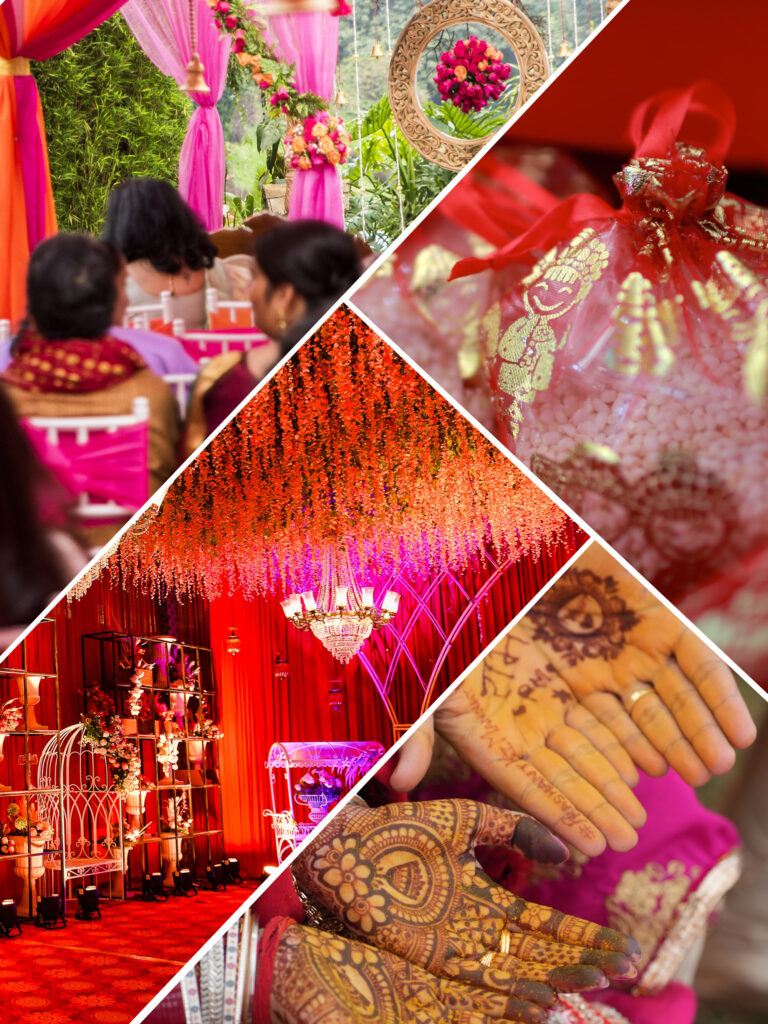
Indian weddings often take place over a few days, with different events each with a different dress code. For example, a Hindu Indian wedding could involve a few different ceremonies:
- Cocktail night – a fun party before the religious ceremonies take place, it’s often black tie.
- The Mehendi or Mehndi (henna) ceremony – when the bride and her family and friends have their henna done. Guests tend to be in bright colours, often with the colour green as the theme.
- The Sangeet – an evening of dancing where the couple get engaged and guests wear sparkly dresses and suits. The word sangeet means “sung together” in Sanskrit.
- The Haldi – a purifying ceremony where guests wear light, colourful clothing often in yellow and orange tones (‘haldi’ translates as turmeric in Hindi).
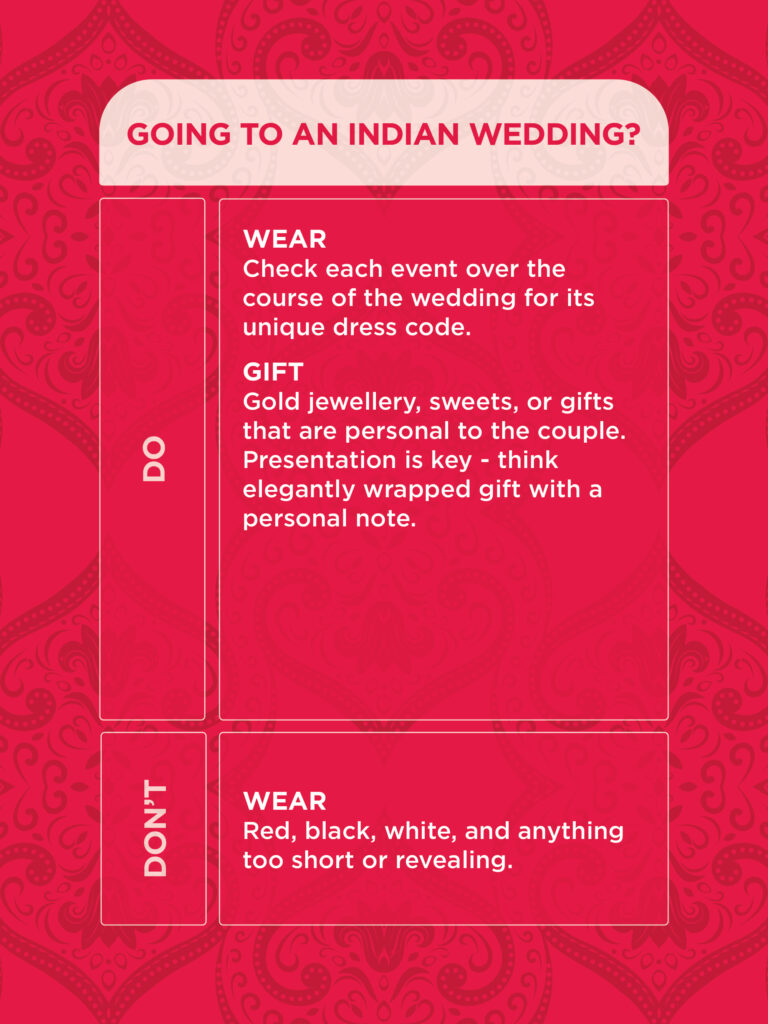
- Phere – this is when the couple take their vows in front of a priest. Female guests will be expected to be in Indian outfits for this, so either a sari or a lehenga suit (an ankle length skirt).
Of course, many weddings these days are fusion weddings, with the couple including some aspects of these ceremonies, with their own personal take on them, so anything goes.

WHAT TO AVOID
The bride traditionally wears red, so it’s best to avoid this, as well as black – which is considered an inauspicious colour. White is also off-limits as it’s associated with funerals and mourning. Keep your outfit modest and respectful of older relatives, so avoid anything too short or revealing, particularly for Muslim weddings where you may have to cover your shoulders, knees and arms and possibly your head.
WHAT ABOUT GIFTS?
Gifts such as gold jewellery are common as gold symbolises wealth and good fortune and is thought to bring prosperity to the newlyweds. Sweets are also common gifts, and gifts that are personal to the couple. Presentation is key too, an elegantly wrapped gift with a personal note will be appreciated.
WHAT TO WEAR TO A CHINESE WEDDING
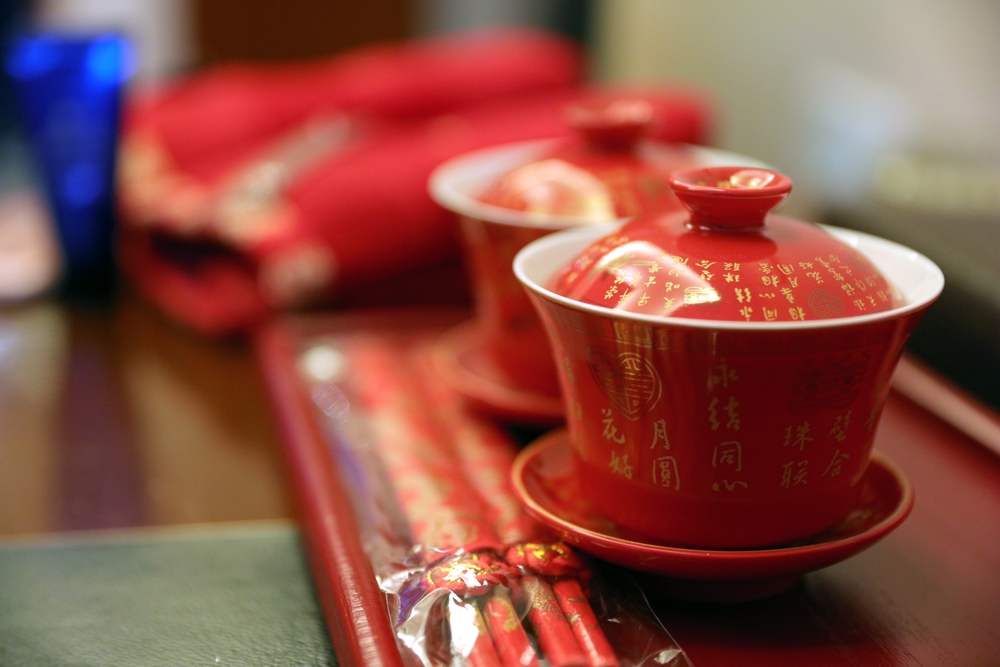
As with all weddings, some Chinese weddings will be very traditional, while others will incorporate contemporary, western traditions, with many couples choosing western wedding outfits. Chinese weddings are often in two parts; a tea ceremony where traditionally the couple pay their respects and show gratitude to their parents, and the wedding banquet which is held in the evening and often includes an eight-course meal.
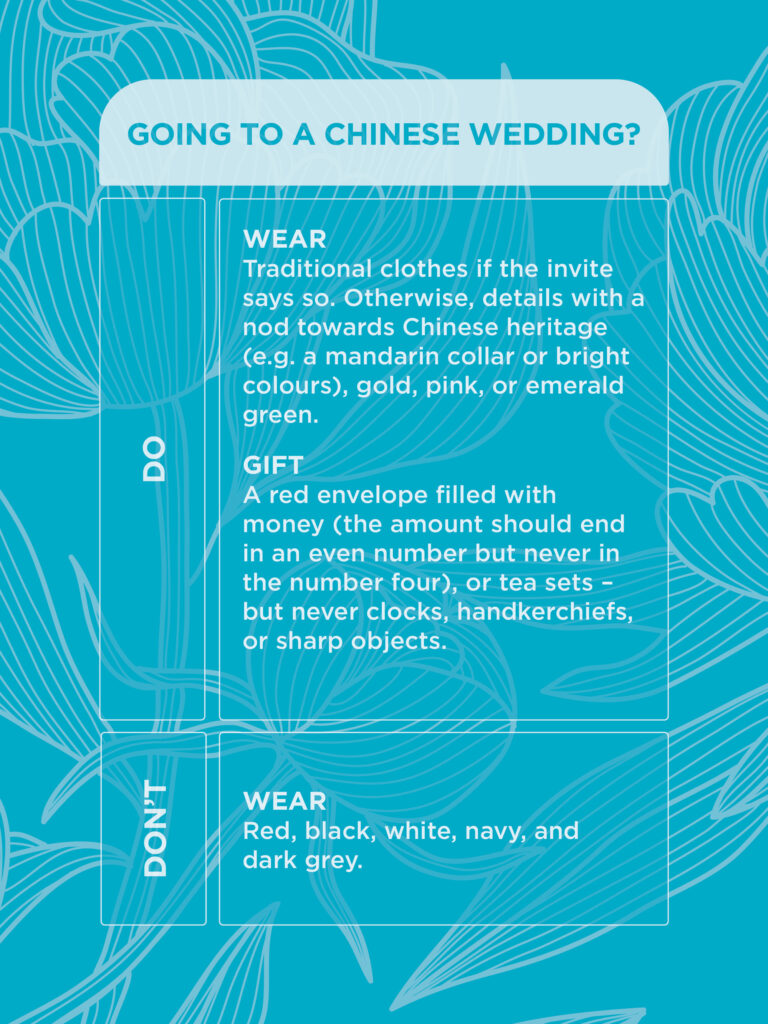
Generally, guests who aren’t family aren’t expected to wear traditional clothes, and the couple will probably include it on the invite if they want guests to do the same, but you might want to acknowledge Chinese heritage with a little nod towards tradition with small details, such as a mandarin collar, or bright colours.
There’s a lot of symbolism in the colours worn at Chinese weddings; purples, pinks, gold and other warm colours are a good choice as these colours represent the couple’s new life.
WHAT TO AVOID
Red is often off-limits for guests, as the bride often wears red – even if they choose a western wedding dress for the ceremony, they may change into a red dress for the reception, so wearing red could be seen as trying to upstage the bride. While it can also be seen to symbolise happiness, prosperity and good fortune; it may be best to choose another vibrant shade such as gold (for prosperity), pink (romance), or emerald green (harmony). Both black and white are associated with mourning and death in Chinese culture, so it’s a good idea to avoid white, black, navy or dark grey.
WHAT ABOUT GIFTS?
A common gift at Chinese weddings is a red envelope, called hongbao, filled with money to symbolise luck and prosperity – the amount should end in an even number but never in the number four, as it’s associated with death due to its similar pronunciation. Tea sets and jewellery are also given at Chinese weddings but never clocks (they symbolise counting down to the end), handkerchiefs (associated with tears and sadness), or sharp objects (they symbolise cutting ties and are thought to be inauspicious).
WHAT TO WEAR TO A PAKISTANI WEDDING
There are many parts to a Pakistani wedding:
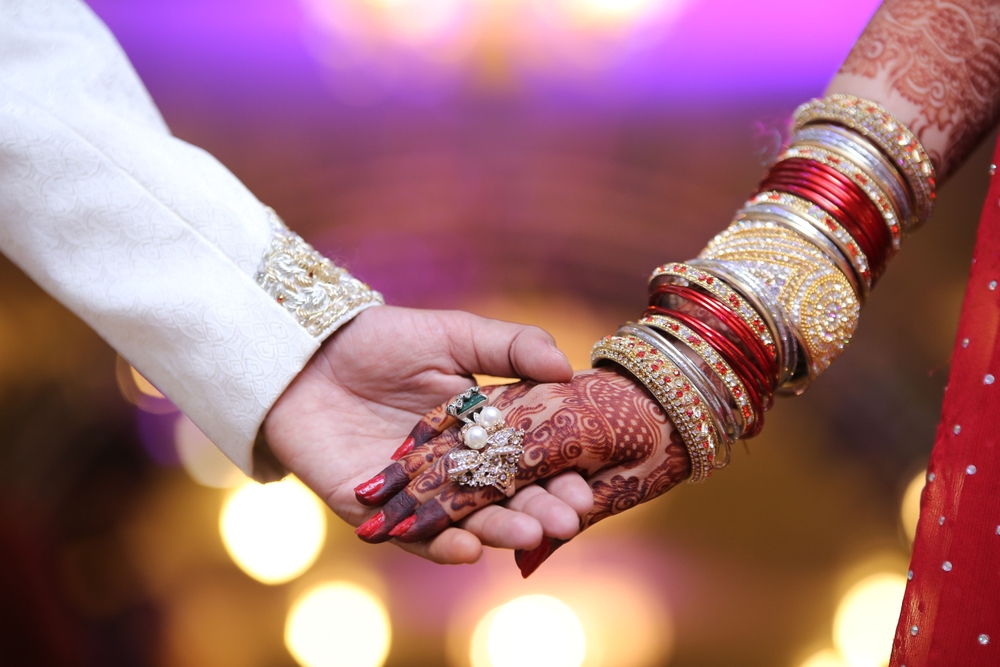
- The pre-wedding Mehndi – this is all about fun and celebration, so green, yellow, mustard and orange outfits are expected.
- The Baraat – this is the groom’s wedding procession leading to the actual wedding ceremony and signifies the start of the festivities. The dress code is formal, lavish and glamorous with bold colours such as red, gold and navy.
- The Nikah – this is the formal marriage ceremony when the couple exchange vows. Guests are expected to wear modest, respectable clothes.
- The Walima – this is the wedding reception, which requires more formal dress. It is hosted by the groom’s family following the Nikah and announces and celebrates the union with the families, friends and the wider community.
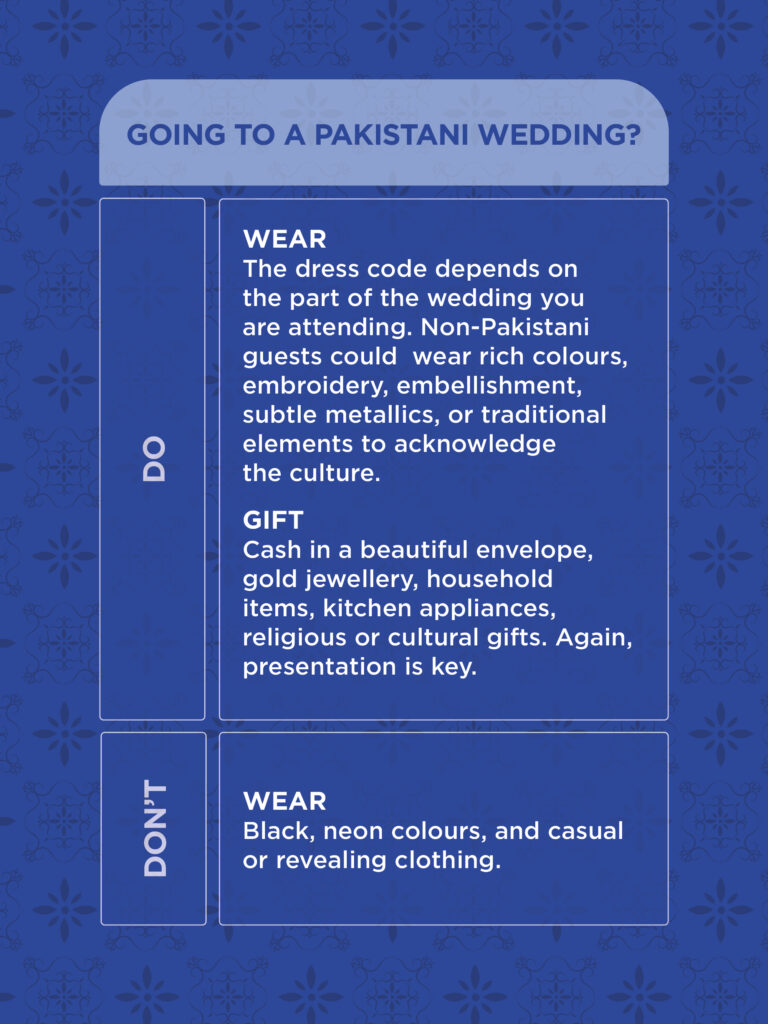
Non-Pakistani guests could wear rich colours with little touches that acknowledge the culture; delicate embroidery, or subtle metallics. Women could wear embellished dresses, while men could wear a Nehru jacket, or a suit in a neutral colour with an embroidered pocket square, or a bright waistcoat.
WHAT TO AVOID
The colour black has cultural connotations that aren’t suitable for a wedding, and neon colours aren’t appropriate. Casual or revealing clothing should also be avoided.
WHAT ABOUT GIFTS?
It’s normal to give cash (Eidi) in a beautiful envelope, but gold jewellery or household items such as kitchen appliances are also common gifts; again, presentation is important. Religious or cultural gifts are also welcome.
Attending an Asian wedding is a great opportunity to experience a different culture, and it’s important to remember that you’ve been invited because the happy couple want you there to share their day with them, and they’ll want you to be comfortable. If you’ve got any doubts about what to wear/take/expect then just ask!
All weddings create a little bit of anxiety; whether you’re the ones getting married and you’re worried about the cost of the wedding, you’re a guest with a best man speech to prepare, or you’re worried about having to say no to a hen do, it’s the same with any big event, but there are things you can do to take the pressure off.
If you know someone who’s planning a wedding, our wedding insurance offers a range of policies with increasing levels of cover, each one covering up to two ceremonies and two receptions in an eight-week period – perfect for that Asian extravaganza. Take a look at the website, or give us a call for a free, no-strings quote.
All content provided on this blog is for informational purposes only. We make no representations as to the accuracy or completeness of any information on this site or found by following any link on this site. We will not be liable for any errors or omissions in this information nor for the availability of this information. We will not be liable for any loss, injury, or damage arising from the display or use of this information. This policy is subject to change at any time.
We offer a variety of cover levels, so please check the policy cover suits your needs before purchasing. For your protection, please ensure you read the Insurance Product Information Document (IPID) and policy wording, for information on policy exclusions and limitations.