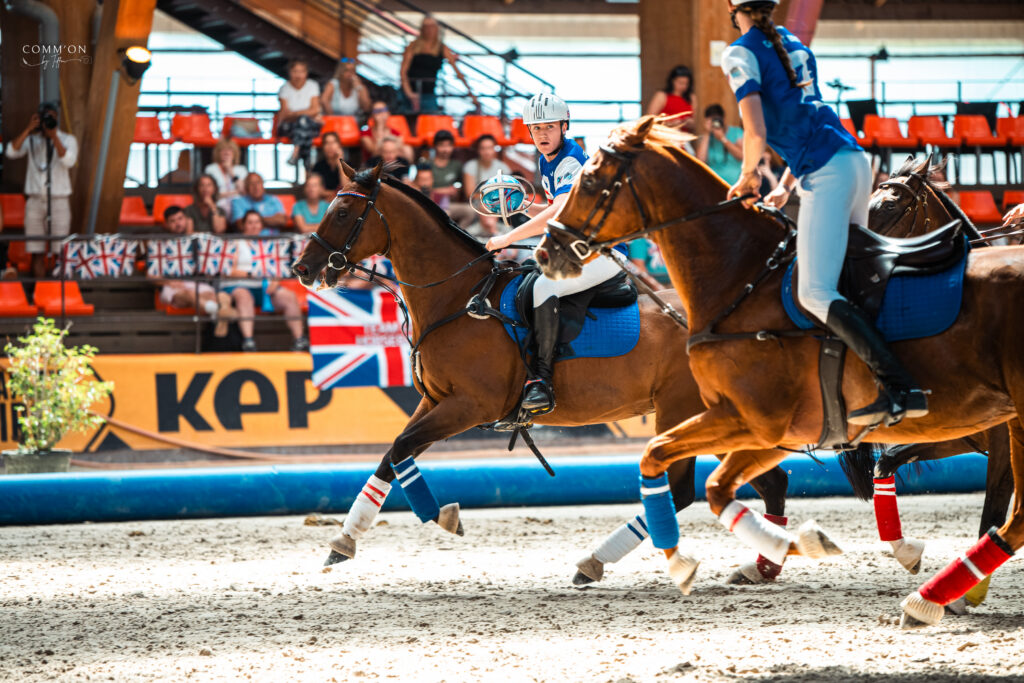
Horseball is a seriously exciting and fast-paced equestrian sport, combining the teamwork of basketball with the skill and athleticism of horseback riding. As proud sponsors of Team GB riders Finn Wildman and Rose Wildman, who have been selected for the FIHB European Championships, we’re taking a closer look at how the sport works, the rules, equipment and skills involved, and how you could get started yourself.
What Is Horseball?
British Equestrian describes horseball as a ‘fast-paced game, involving players within a team passing and throwing a ball on horseback. It’s a team sport, where two teams of four players (plus two substitutes) compete against each other, and it’s likened to rugby or basketball on horseback.’
Horseball is linked to Pato, which is a national sport in Argentina. It was adapted in France before coming to Britain in the early 1990s.
With its origins in France, the Fédération Internationale de Horseball (FIHB) was established with the aim of controlling, organising and enhancing the image and status of the game of Horseball internationally. In the UK, the British Horseball Association (BHA) is responsible for organising and developing the sport and is one of many independent member bodies which are under the governing body British Equestrian (BE).
How Is Horseball Played?
Horseball is a true team sport played at speed. Players need excellent balance, communication and awareness while working together to move the ball up the pitch and score goals.
Each team is made up of four players and two substitutes (six players in total per team). Each team must have a captain. As the team’s representative, the captain is the only player allowed to address the referees. There are two referees, one mounted and one at the side of the arena.
The game itself is played on a soft surface, typically sand, in a rectangular pitch that is 65m x 25m. There’s a goal in the centre of each end of the pitch which is positioned 3.5m above the ground and consists of a vertical hoop measuring 1m in diameter.
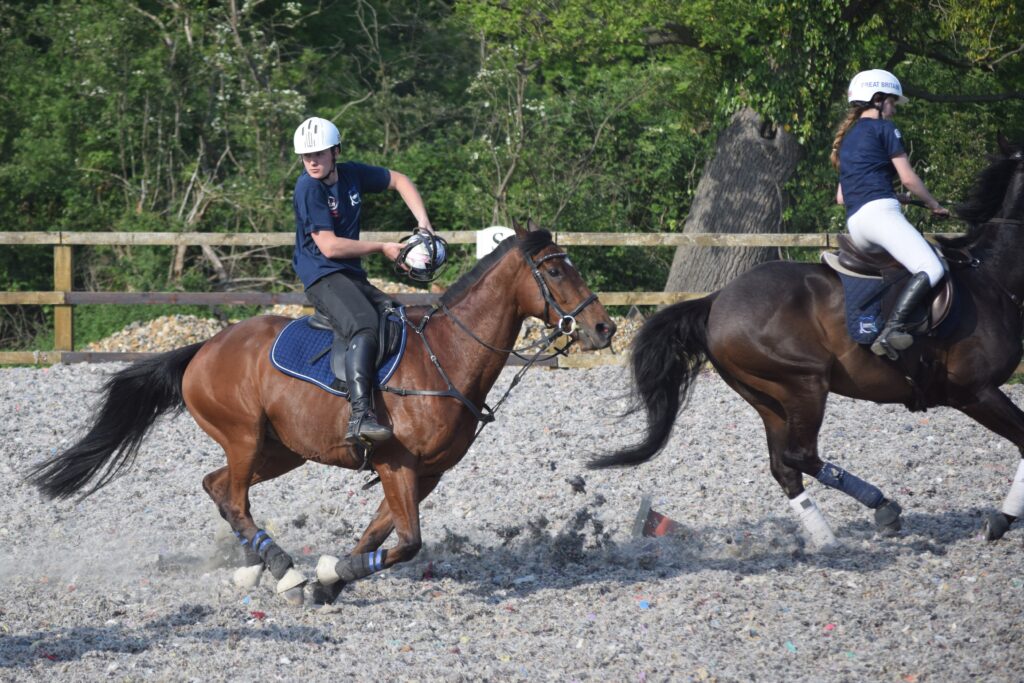
The ball is essentially a junior size football, surrounded by a harness with six leather handle straps attached to it.
A full game lasts for 20 minutes, 10 minutes for each half with a short three-minute break. Each team can also request a 30 second time-out in each half, but this must be during a break in play. The game clock will be stopped during the time-out.
At the end of the game, the team with the most goals wins.
The Rules of Horseball Explained
Deciding which team picks up first or which end of the pitch to defend is decided by a coin toss.
Whoever wins the coin toss may either decide:
- Who will pick up first (the starting team);
- Which end of the pitch they play.
If the team that wins the coin toss chooses to pick up first, the other team can then choose which end to defend. And vice versa, if the team that wins the toss chooses which end to defend, the other team will pick up first.
When entering the pitch, the teams must remain on their respective halves of the pitch. At half-time, the teams will then switch ends, and the team that didn’t pick up first in the first half, will have a chance to pick up first this time.
Here’s a quick breakdown on the gameplay of horseball:
- Only four players are allowed on the pitch per team, however, you can play with only three players, but no less than that number.
- Substitutions can be made when there is a break in play, such as when a goal is scored. There is no limit to the number of substitutions made either.
- There must be a minimum of three passes between three different players on the same team before attempting to score a goal. During this time the ball must not have been dropped, and there must not have been a change in possession, for the three pass count to be valid. If the ball is dropped or there is a change in possession, the pass count restarts.
- A shot on goal can be made anywhere on the pitch.
- The ball cannot stay within the hands of a player for more than ten seconds at a time; therefore, it’s a constant passing of the ball between players in their team while they plan their attack.
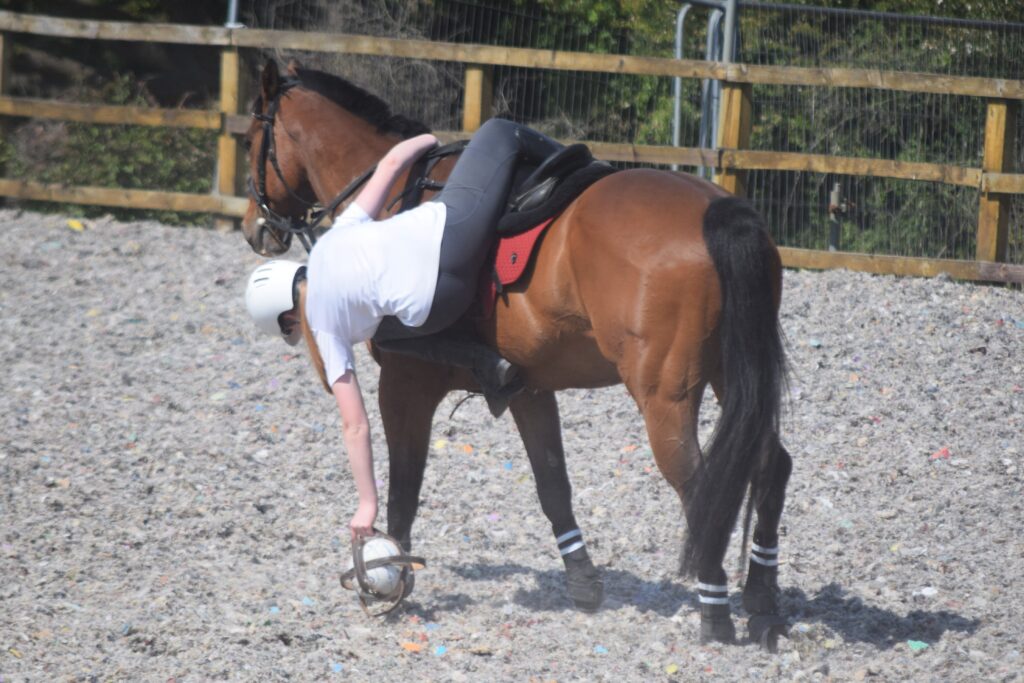
- If the ball falls to the ground, players must pick it up without dismounting their horse. This action is known as ‘ramassage’ which is French for the action of picking up the ball.
- The opposition team can intercept, tackle or retrieve the ball if it goes to ground.
- If the ball goes out of play, the game will restart with a line-out.
- Physical tackling is allowed but must follow the official rules.
What Equipment Is Needed for Horseball?
For beginners, standard riding equipment may be sufficient to get started.
For the Rider
- Helmet – Any approved riding helmet.
- Boots – Long riding boots are preferred.
- Protective clothing – Such as back protectors.
For the Horse
- Saddle and tack – Your normal saddle and tack should be fine, as long as it’s in good condition, and correctly fitted and fastened.
- Pick-up straps – This is the only activity specific piece of equipment you’ll need. The pick-up strap connects both stirrups under the horse’s belly. They should connect through the loop on the martingale and allows the rider to safely lean down to pick up the ball.
- Protective boots and bandages.
The Horseball
- You can’t play horseball without an actual horseball, although if you’re training at a club that already plays the sport, they’re more than likely going to have one or two.
While you’re putting together your horseball equestrian toolkit, how your horse gets to training sessions and competitions will also be a consideration. Horse trailer insurance and trailer hire insurance can help complete the picture, giving you added peace of mind whether you’re heading to a local fixture or a major championship.
What Skills Are Needed to Play Horseball?
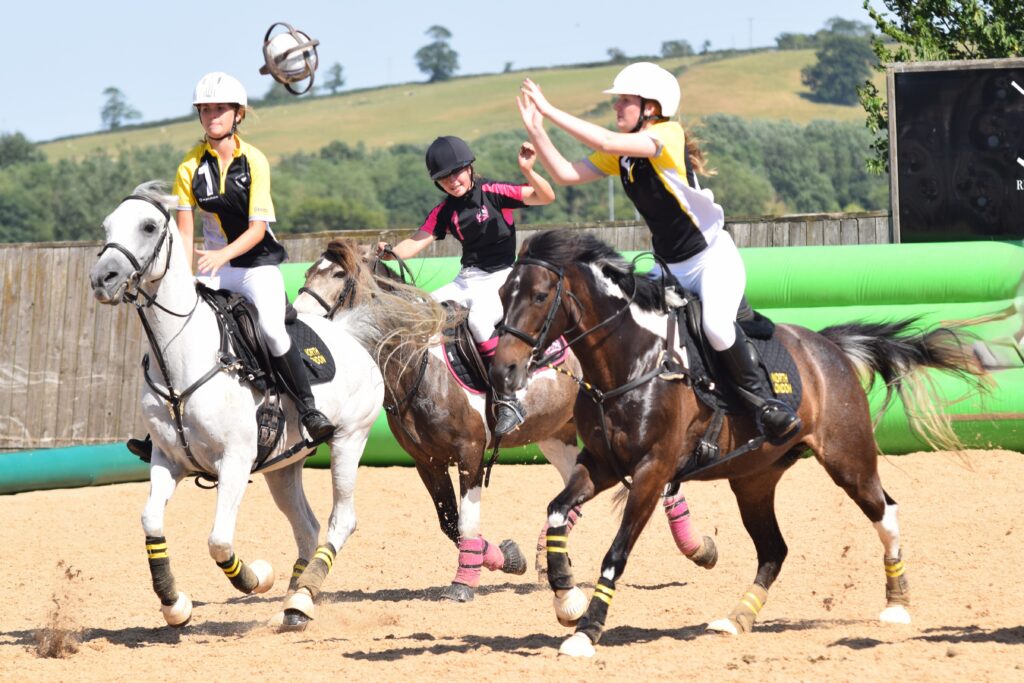
To play horseball you will need to already know how to ride a horse as it requires balance and coordination, as well as the ability to get up to cantering speeds, all the while holding on to the reins with just one hand.
It’s also a sport that requires teamwork, thanks to the three pass rule, and lots of communication among players. The horse itself will need to be in good physical fitness and have good responsiveness due to the agility required to move around the pitch.
If you do fancy giving it a go, full training is provided by qualified coaches at a number of clubs across the country.
Who Can Take Part in Horseball?
Children as young as eight can begin lessons in horseball. Junior players (Under 16 category) are aged 12-15 years old and Senior players (Under 21s category) are 15-20 years old. There are also pro divisions for players that want to compete beyond the U21s level.
There are several competitions throughout the horseball season that could see riders compete in tournaments internationally.
How to Get Involved in Horseball in the UK
If you’re considering getting into horseball it’s worth taking a look on the BHA to find out if there’s a venue near you that offers horseball lessons. There are BHA-approved coaches based throughout the UK that you could reach out to discuss setting up one of their ‘have a go days’ at your yard or riding school.
The Benefits of Playing Horseball
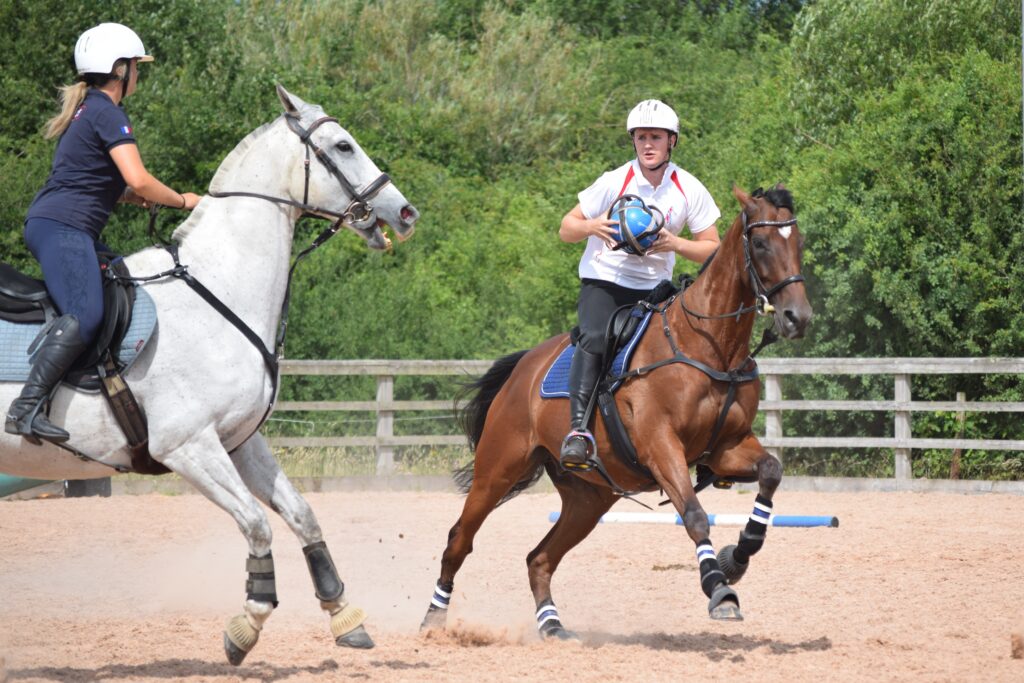
While horseball will require you to have a basic level of riding, the intensity of it means you should see your riding skill improve thanks to the physical demands of the sport. It should also build on your confidence while learning the importance of teamwork.
What’s more, it helps to keep horses mentally and physically engaged and could lead to you being a part of a strong social community.
Horse Welfare and Safety in Horseball
As with any equestrian activity, horseball doesn’t come without risk. However, the rules of the sport have been designed to reduce that risk as much as possible to ensure safe play. The BHA has strict practices to ensure rider safety and horse welfare. For the clubs listed on the BHA site, only their approved coaches are used to deliver horseball coaching.
Why Insurance Matters for Horseball Riders
While horse welfare standards and safety regulations help reduce risk, horseball remains a competitive sport where unexpected accidents, injuries or illnesses can occur. That’s why owners may want to consider horse insurance to help provide financial protection should the unexpected happen.
Here at The Insurance Emporium, horseball is an equestrian activity available on our horse insurance policies. Death, Theft or Straying is a standard benefit, with Vet’s Fees, Loss of Use and Public Liability (Standard) just some of the additional benefits policyholders could add to their policy.
If you do have equestrian insurance, it’s worth checking your policy covers the type of equestrian activity you intend to use your horse for.
If you don’t own a horse, standalone horse rider insurance is also an option. Our cover comes with several standard benefits that include cover for you as well as some emergency cover for the horse you’re riding.
Supporting Talent at the FIHB Championships and Beyond
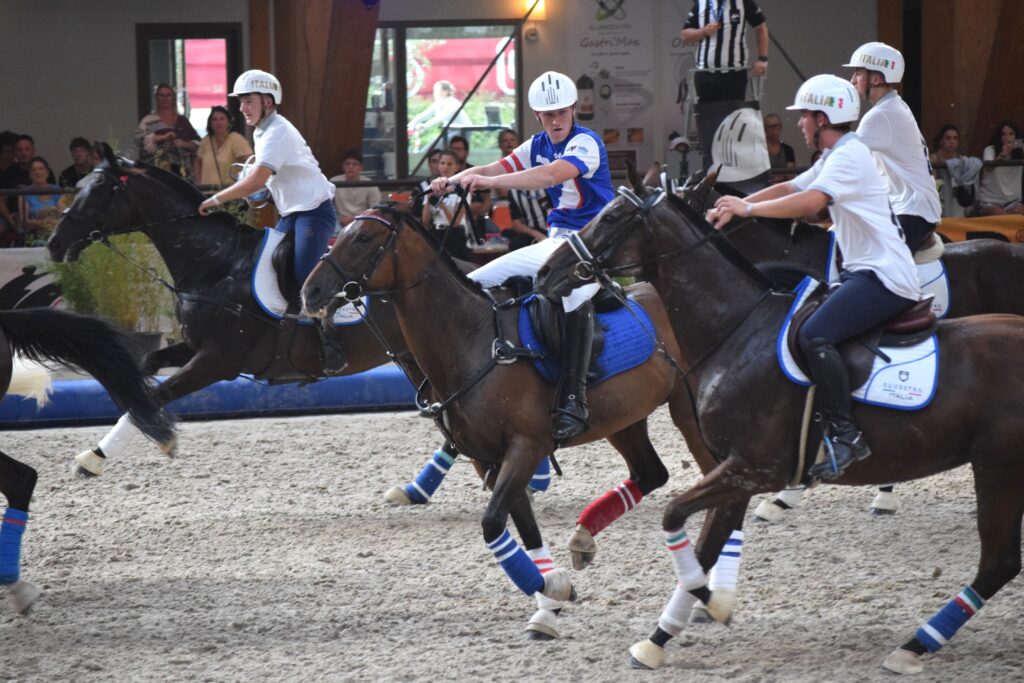
We are delighted to be sponsoring riders Finn and Rose Wildman this horseball season. Both have been selected to represent Team GB at this year’s FIHB European Championships. Finn is the U21s Captain, while Rose is a reserve for the U16s team.
What’s more, their teams will also be competing in the FIHB Super Champions League 2026. We wish the teams good luck as they go into these competitions.
Frequently Asked Questions
Is horseball difficult to learn?
No, all clubs affiliated with the BHA have approved horseball coaches that will help riders as they learn the sport.
What breed of horse is best for horseball?
Any type of horse can be used for horseball, from ponies to horses, and if you don’t own a horse – horseball clubs often have horses you can hire.
Is horseball safe for horses?
Yes, the BHA has a strong emphasis on horse welfare.
How many players are on a horseball team?
A team has four players on the pitch, and two substitutes.
Can beginners play horseball?
Horseball may not be suitable if you’ve never ridden a horse before, but if you do have some riding experience you could pick it up.
Where can I watch horseball competitions?
The BHA has a series of competitions throughout the horseball season in the UK, while some Universities also take part in the BHA’s Open Championship. There are also championships held by the FIHB in France too.
Is horseball popular in the UK?
It’s growing in popularity. Since being established in the UK in 1991, more clubs have begun offering horseball lessons each year.
This blog is in no way sponsored, endorsed, administered by or affiliated with any brands or external websites mentioned in this content.
All content provided on this blog is for informational purposes only. We make no representations as to the accuracy or completeness of any information on this site or found by following any link on this site. We will not be liable for any errors or omissions in this information nor for the availability of this information. We will not be liable for any loss, injury, or damage arising from the display or use of this information. This policy is subject to change at any time.
We offer a variety of cover levels, so please check the policy cover suits your needs before purchasing. For your protection, please ensure you read the Insurance Product Information Document (IPID) and policy wording, for information on policy exclusions and limitations