
Once upon a time, attending a wedding meant buying a card, a gift, and maybe a hotel room. Fast forward to 2026, and it’s more likely to involve travel, outfits, accommodation, and multiple events, all of which are adding up to a hefty bill for guests.
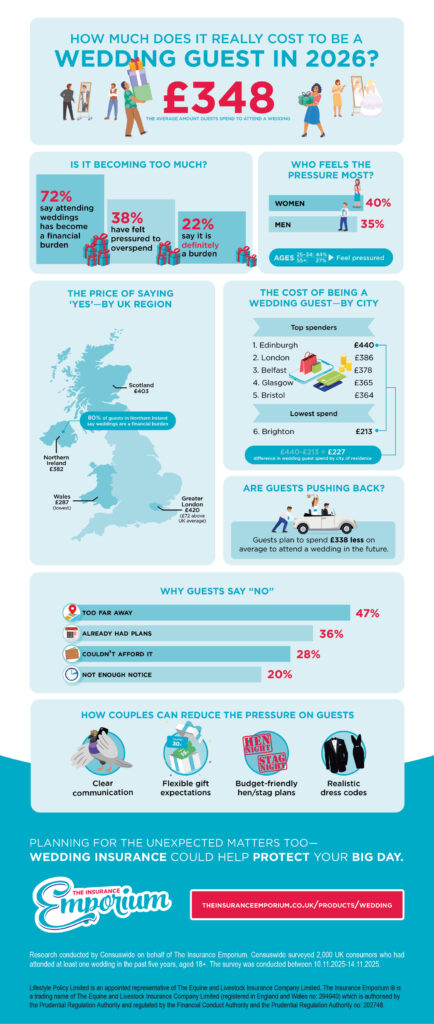
New research conducted by Censuswide on behalf of The Insurance Emporium* reveals that attending a wedding now costs guests £348 on average, with many saying the financial pressure is becoming hard to ignore. With that in mind, let’s find out what else our research revealed.
The Average Wedding Guest Now Spends £348
Our research revealed that when guests thought back to how much they’d spent on:
- Travel and transport
- Accommodation
- Outfits and grooming
- Wedding gift
…they’d spent on average £348. Surprisingly, male guests said they’d spent more, paying out on average £364, compared to females who said they’d spent £339.
Meanwhile over 72% of people say attending weddings has become a financial burden, 22% say ‘definitely’ and more than a third admit they’ve felt pressured to overspend.
Wedding Guest Costs by Location
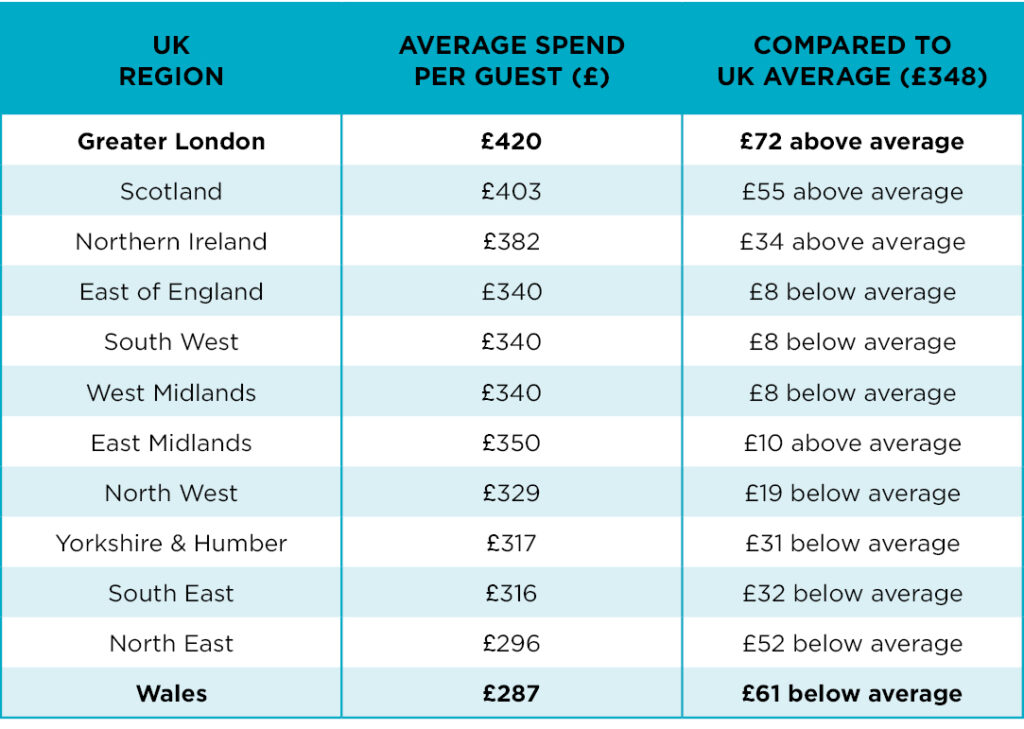
Guests located in Greater London tend to spend the most – on average £420 – while guests in Wales spent the least – £287.
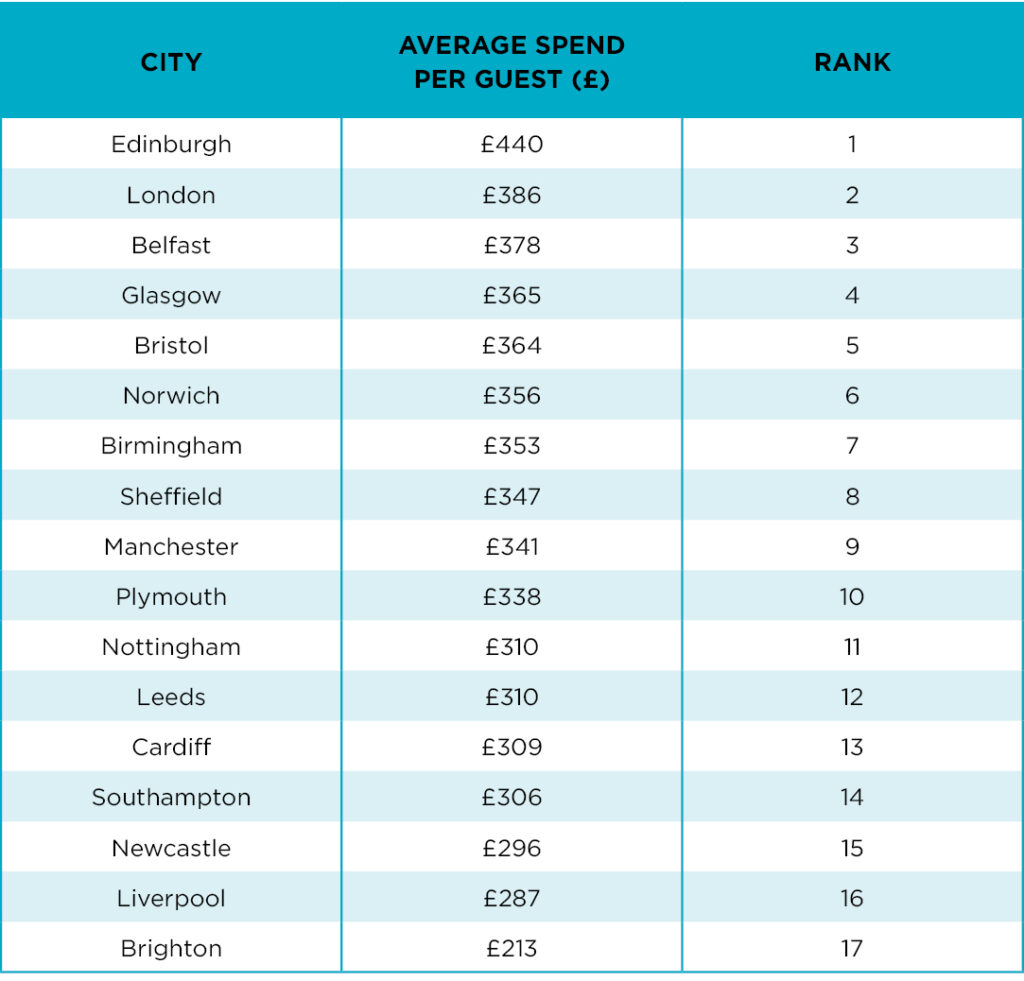
When it came to city-based findings, guests located in Edinburgh spend the highest at £408 on average, whereas guests in Brighton spend the least at £192.
Four out of five (80%) people based in Northern Ireland believe attending weddings has become a financial burden for guests.
48% of wedding guests revealed that the most common thing they’ve been asked for when attending a wedding is ‘monetary gifts (e.g., contributions towards their honeymoon)’ followed by 35% who said the couple had ‘registered for wedding gifts’.
Guests Feel Constrained to Spend More Than They Want To
38% of guests surveyed said ‘Yes’ to feeling pressured to overspend, this percentage was highest in those aged 25-34 at 44%, compared to 27% of those aged 55+.
Guests in Northern Ireland were split 50/50 between ‘Yes’ and ‘No’ with 49% feeling pressure to spend more than they could afford to attend a wedding, and those located in Belfast feeling the pinch more at 51%.
The sentiment of feeling pressured was felt more strongly among women at 40%, compared to men at 35%.
Some of the reasons that guests perhaps feel pressured to overspent could begin with the hen/stag do, in 2024 the average cost of a hen party, per person, was £250, and that’s before you factor in the wedding itself – new outfits, travel, presents, hair, drinks etc.
Are Guests Quietly Pushing Back?
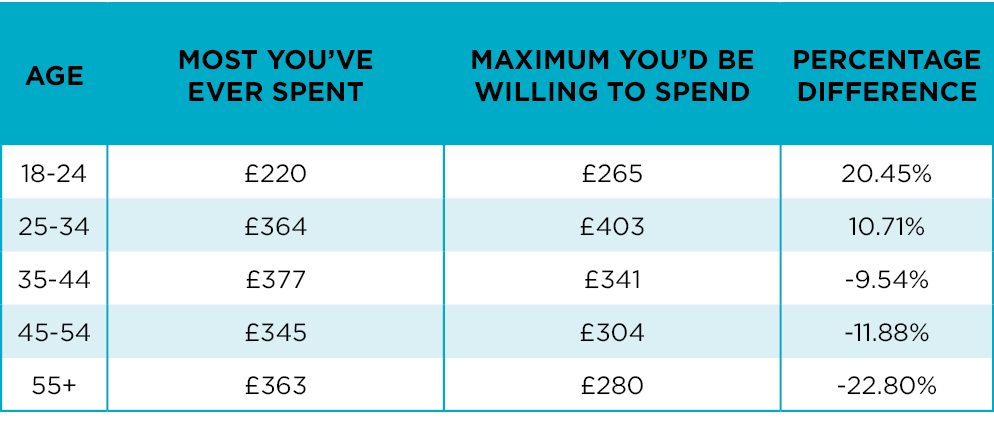
While weddings are becoming more expensive, when asked how much they’d be willing to spend on a wedding in the future, respondents said £338 on average, suggesting guests are quietly planning to spend less.
This sentiment was mainly shared by people aged 35+, compared with those aged 18-24 years old who are willing to spend 20% more in the future, and those aged 25-34 years old looking to spend 11% more in the future.
What Couples Can Do to Reduce Pressure on Guests
While your big day is special to you, and you and your partner will want all of the most important people in your lives to be there with you, there is a balance to be had between wedding bliss and money stress and that’s not just the cost of your wedding, but the cost for your guests to be there too.
To help, here are some considerations to try to ensure your guests aren’t worrying about the financial pressure of attending your wedding, so that they can focus on making it a day to remember by being there.
- Clear communication: perhaps consider a wedding website to share details of the wedding, from the dress code to the venue and travels options. Consider hotel options to suit all guests’ budgets.
- ‘No gifts’ request: If you explicitly ask for ‘no gifts’ or ‘your presence is our gift’ it could reduce the financial pressure on guests to buy something.
- Rent or recycle: encourage your guests to re-wear something they already have, chances are not many people will have already seen them in the same outfit, or if they want something different, but without the price tag, perhaps they could consider renting, it could be kinder on their wallet and on the planet.
- Make hen/stag/sten dos affordable: There’s no shying away from the fact that hen/stag/sten dos have escalated from a night out in your hometown, to a weekend or week – long affair, often in a foreign location. Making it a ‘big thing’ can put a lot of pressure on people who don’t feel they can turn down a hen do. Consider setting some ground rules with your close wedding party who are eager to plan you a night or weekend to remember, by making sure the location isn’t too far, and that it’s planned in plenty of time to allow for guests to make arrangements, as well as making sure the entertainment is set within a reasonable budget.
When it came to reasons why guests had declined a wedding invitation, respondents cited ‘too far away’ as the number one reason they’d declined (47%) followed by ‘had another commitment that date’ (36%), ‘couldn’t afford the travel, accommodation and other associated costs’ (28%) and then ‘didn’t receive enough notice to plan or budget’ (20%).
Francis Martin, Chief Executive Officer at The Insurance Emporium, commented:
Weddings are meant to be joyful occasions, but for many guests they’re starting to feel like a significant financial commitment. With costs rising across travel, accommodation and everyday living, it’s understandable that people are becoming more conscious of how much they can realistically afford to spend on attending a wedding.
For couples planning a wedding, being mindful of the financial pressure on guests, as well as planning for the unexpected, is becoming more important than ever.

While thinking about the financial strain a wedding can have on guests, it’s also an important consideration for couples too, from planning your wedding to suit your budget, to thinking about what would happen when things go wrong. Wedding insurance won’t cover a change of heart, but could cover cancellations, financial failure of suppliers and accidental damage, loss and theft, to name but a few.
The Insurance Emporium has nine different policy types to choose from, all of which can be tweaked with some additional optional benefits, so take a look and get a free, no-strings quote before you tie the knot.
*Censuswide surveyed 2,000 UK consumers who had attended at least one wedding in the past five years, aged 18+. The survey was conducted between 10.11.2025-14.11.2025.
All content provided on this blog is for informational purposes only. We make no representations as to the accuracy or completeness of any information on this site or found by following any link on this site. We will not be liable for any errors or omissions in this information nor for the availability of this information. We will not be liable for any loss, injury, or damage arising from the display or use of this information. This policy is subject to change at any time.
We offer a variety of cover levels, so please check the policy cover suits your needs before purchasing. For your protection, please ensure you read the Insurance Product Information Document (IPID) and policy wording, for information on policy exclusions and limitations.