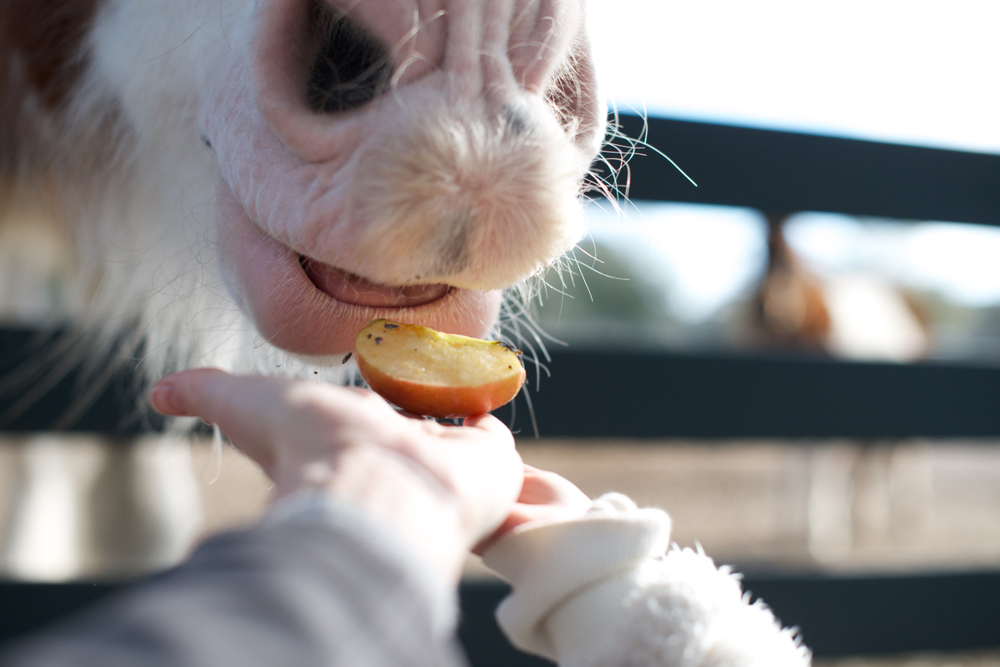
The latest in our blog series about what horses can eat, asks, ‘Can horses eat apples?’
The short answer is yes; they can!
We know how important it is that our horses are safe, happy and healthy, but we also know how nice it is to give them a little treat every so often – after all, who doesn’t like a sweet treat? But it can be tricky knowing which foods a horse can eat.
We’re going to look at the nutritional benefits of giving your horse an apple, give you a little guidance for introducing them if they haven’t had apples before, and address some common concerns.
THE NUTRITIONAL BENEFITS OF APPLES FOR HORSES
Apples aren’t just a sweet treat for your horse; they also have valuable nutrients:
- Vitamin A – This is important for eye health as well as for maintaining a healthy immune system.
- Vitamin C – This is a good antioxidant; antioxidants help support the immune system by protecting the body against free radicals – the molecules that can cause damage to cells if there are too many for the body to neutralise.
- Potassium – This helps maintain a horse’s nerve function.
- Dietary Fibre – This helps to support a healthy gut and reduce the risk of constipation and colic.
- Natural sugars – This makes apples a great source of quick energy.
Apples also contain a lot of water, so can help keep your horse hydrated, especially in the summer months.
PRECAUTIONS TO TAKE WHEN FEEDING HORSES APPLES
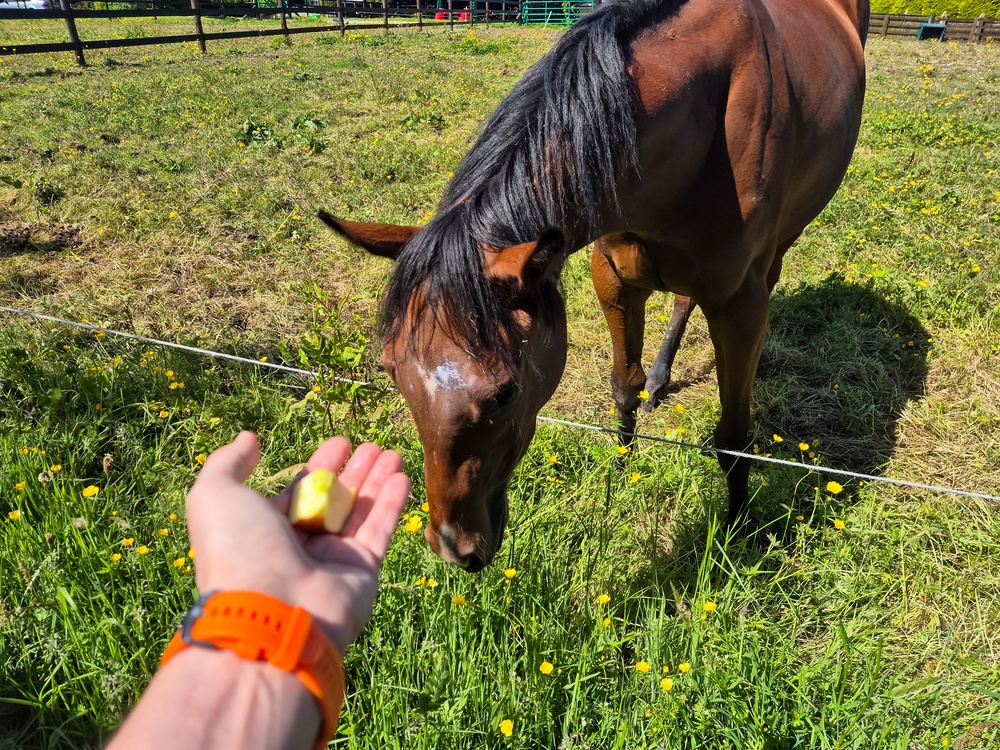
Apples are a great snack for horses, and any change to their regular diet provides some mental stimulation, but any new foods should be introduced gradually, and there are precautions you should take:
- Cut the apples into small pieces as they can be a choking risk.
- Always check with the horse’s owner before offering any food to a horse you don’t own, as you don’t know if they have any conditions or dietary requirements that determine what they can and can’t eat.
- Don’t give them apple-based products as they might have added sugar or artificial additives.
- Check windfall apples to make sure they’re fresh as if they’ve been on the ground for a while they could be mouldy or rotten, or even fermented. Fermented apples can produce excess gas in the gut, which could lead to colic, but they can also produce ethanol and while that might seem harmless, and maybe even amusing to think of a horse being drunk, it can affect their natural instincts and sense of danger, as well as affecting their cells and their heart.
CAN HORSES EAT APPLE CORES?
Apple cores are very fibrous and hard to swallow so they could be a choking risk, it’s best to stick them in the compost bin instead.
COMMON MYTHS
“Apple seeds are toxic to horses.”
While a small quantity of apples seeds won’t cause any harm, they do contain something called Amygdalin which converts to cyanide when chewed. This is toxic to both humans and horses and could lead to death, but a horse would have to eat A LOT for them to have an adverse effect; to put it into perspective, we would have to eat around 300 apples in one go for it to be lethal, so a horse would need considerably more.
“Apples can give horses colic.”
Any change in diet can cause digestive issues if it’s not introduced gradually and it’s always important to monitor your horse when introducing a new food, but apples don’t directly cause colic.
“Horses can’t eat crab-apples.”
Crab-apples are fine in small quantities, but they tend to be more acidic, so could cause digestive issues. As with any new food, monitor your horse careful after giving them crab-apples.
HOW TO INTRODUCE APPLES INTO A HORSE’S DIET
Wash the apples to get rid of any pesticides on the skin, then chop them into small pieces and remove the cores. As is standard with any dietary change, introduce apples gradually, leaving a couple of days in between to make sure there are no issues, then aim to build up to one or two small apples a day.
You could use them as an enrichment activity and put them in a foraging toy or snuffle mat; they can also be used to encourage your horse to take medicine or used when training your horse.
As with any new foods, keep an eye out for any negative reactions, such as changes in appetite, lethargy and excessive drinking/urinating.
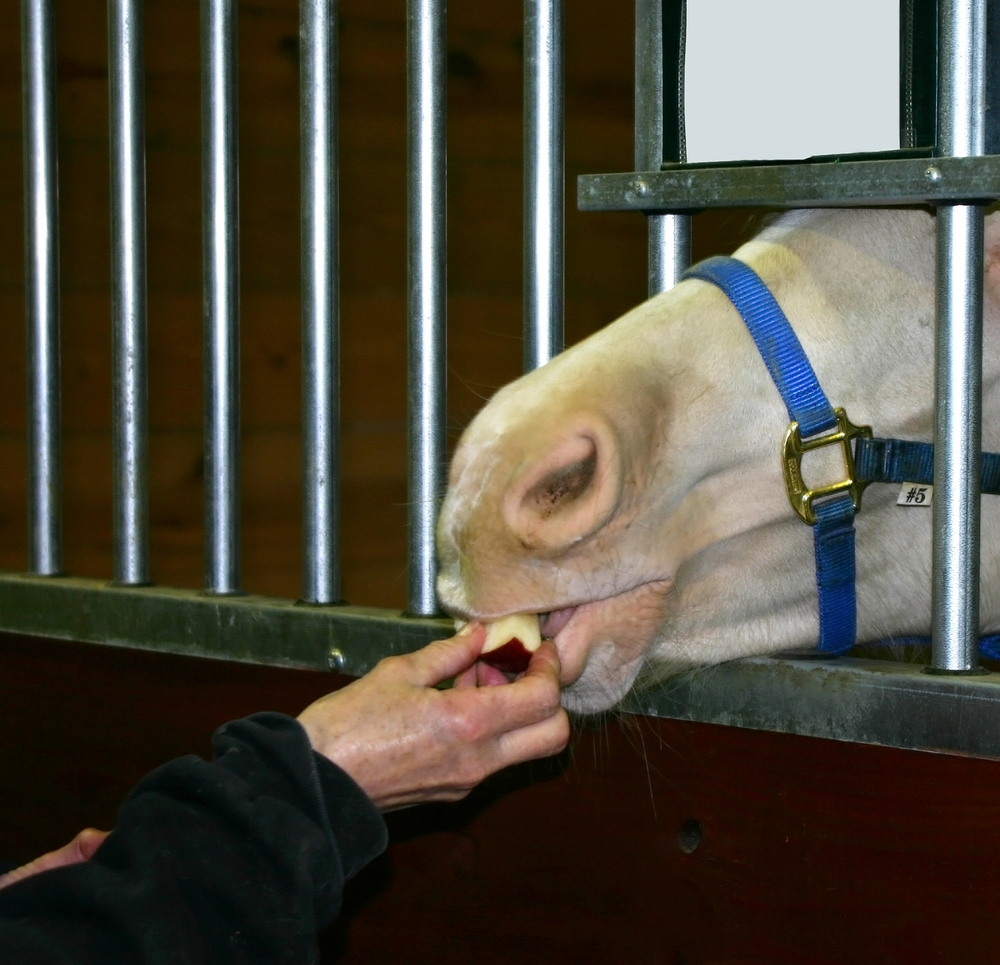
Giving your horse a treat is a great way to bond with them, and to give them some variety in their diet; treats can also be used to encourage your horse during training or provide some extra mental stimulation. But it’s important to remember that treats only compliment a healthy, balanced diet, and they should mainly be eating a diet that consists of hay, grass and feed.
In an ideal world we’d be able to keep our horses safe and well at all times, but accidents and illnesses do happen, and anyone who’s involved with horses knows just how much veterinary treatment costs, so it’s worth considering having a horse insurance policy in place to ensure that if the worst does happen, you know you’re covered.
Our policies come with Death, Theft or Straying as standard and you then pick ‘n; mix the optional benefits that suit you, your horse and your budget. Take a look at our website, or give us a call for a free, no-strings quote today.
All content provided on this blog is for informational purposes only. We make no representations as to the accuracy or completeness of any information on this site or found by following any link on this site. We will not be liable for any errors or omissions in this information nor for the availability of this information. We will not be liable for any loss, injury, or damage arising from the display or use of this information. This policy is subject to change at any time.
We offer a variety of cover levels, so please check the policy cover suits your needs before purchasing. For your protection, please ensure you read the Insurance Product Information Document (IPID) and policy wording, for information on policy exclusions and limitations.