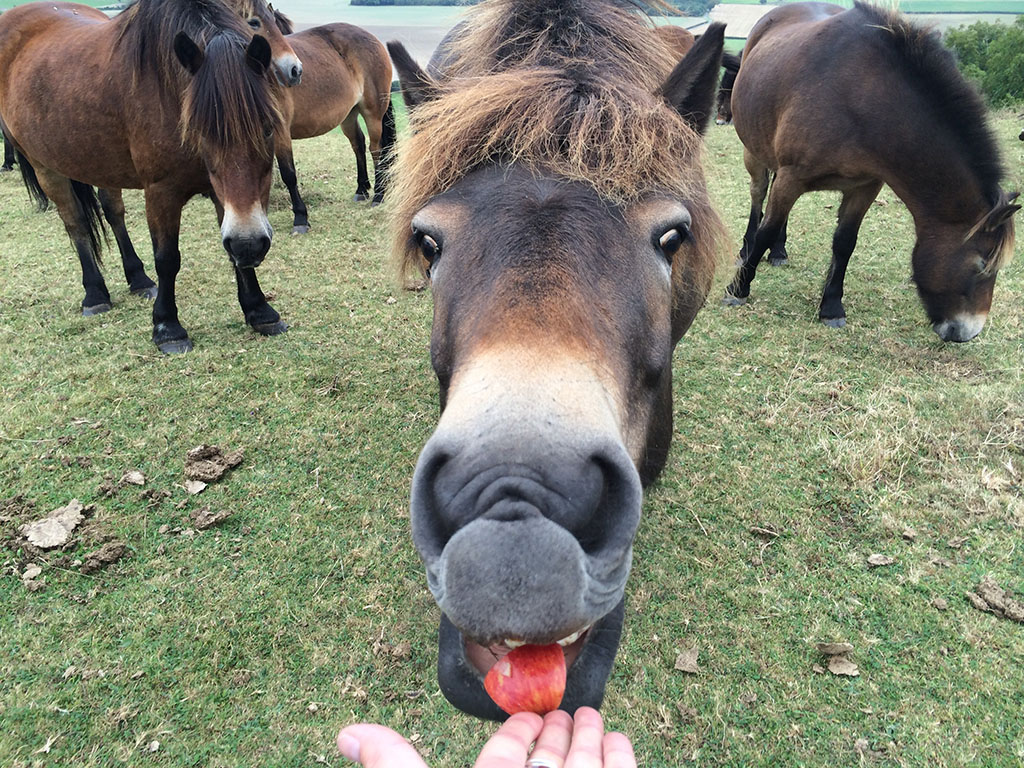
We all love a treat, right? Well our equine friends aren’t any different and one of the questions we’re often asked is – can horses eat fruit? The thing with horses is they would probably quite happily eat up anything you offered them and still ask for more, and while the saying ‘eat like a horse’ generally refers to the amount of food a horse needs due to its size, our four-legged friends actually have quite delicate stomachs. They’re prone to digestive upsets, particularly when it comes to new foods, and there are certain foods horses can and can’t eat.
Horses are used to eating little and often, they’re slow-grazing feeders and their stomachs can’t handle large quantities of food. They also need to eat plenty of fibre and are prone to diarrhoea and colic.
Our horses will eat anything we give them, especially if it’s sweet, so it’s up to us to make sure they have the right treats in the right amounts – we also need to learn how to say no! With this in mind, let’s have a look at the fruit that horses can eat, as well as the fruit they really should avoid.
SAFE FRUIT FOR HORSES
- Citrus Fruit – Citrus fruit is full of vitamin C, which is good for muscles, skin and joints.
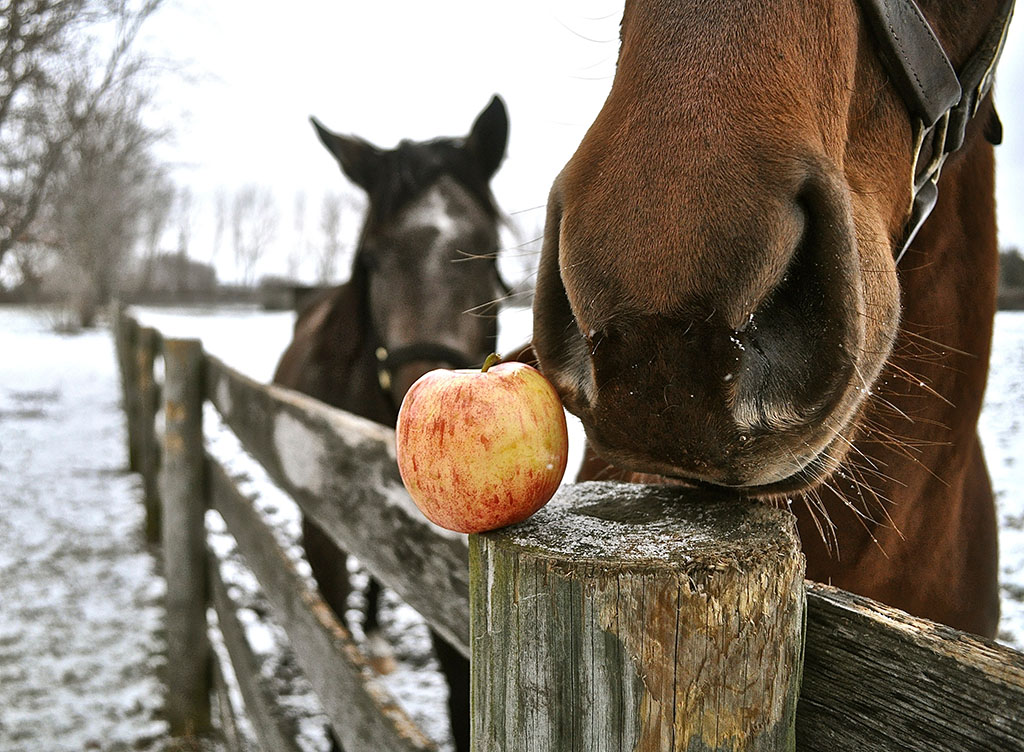
- Apples – Remember to remove the core as this can be quite hard and is a choking risk, apple cores also contain some sugar.
- Bananas (including the peel) – Bananas are very nutritious as they contain potassium, magnesium, vitamin C and vitamin B6, but they’re high in sugar so should only be given in moderation.
- Watermelon – This is great on hot days as it’s full of water. You can also give them the rind.
- Grapes – Remember to cut them in half as they can be a choking hazard.
- Berries (including blueberries, strawberries, raspberries and blackberries).
FRUIT TO AVOID
- Avocado – Cardiotoxins on avocados can cause heart problems in horses and the fruit, leaves and seeds of the plant can be fatal.
- Rhubarb – Rhubarb contains oxalates; a compound that can cause gastrointestinal upsets as well as a calcium deficiency.
- Tomatoes – Tomatoes are part of the nightshade family and contain tropane alkaloids that can irritate the intestines and disrupt the heart rate, as well as causing lethargy.
- Cherries – Cherry stones contain the toxin cyanide, so they need to be removed first. Cherries are also high in sugar so should be offered sparingly.
| Fruit Horses Can Eat | Fruit Horses Can’t Eat |
| Citrus fruit | Avocados |
| Apples | Rhubarb |
| Bananas | Tomatoes |
| Watermelon | Cherries |
| Grapes | |
| Berries |
THINGS TO CONSIDER WHEN GIVING A HORSE FRUIT AS A TREAT
Palatability
Horses can be like huge toddlers; they’re extremely picky and they’re not always open to trying new things. They might need to try something a few times before deciding whether or not they like it but there have been studies into the flavours that most horses seem to like. These include:
- Banana
- Cherry
- Rosemary
- Fenugreek
- Cumin
- Carrot
- Peppermint
- Oregano
Portion Control
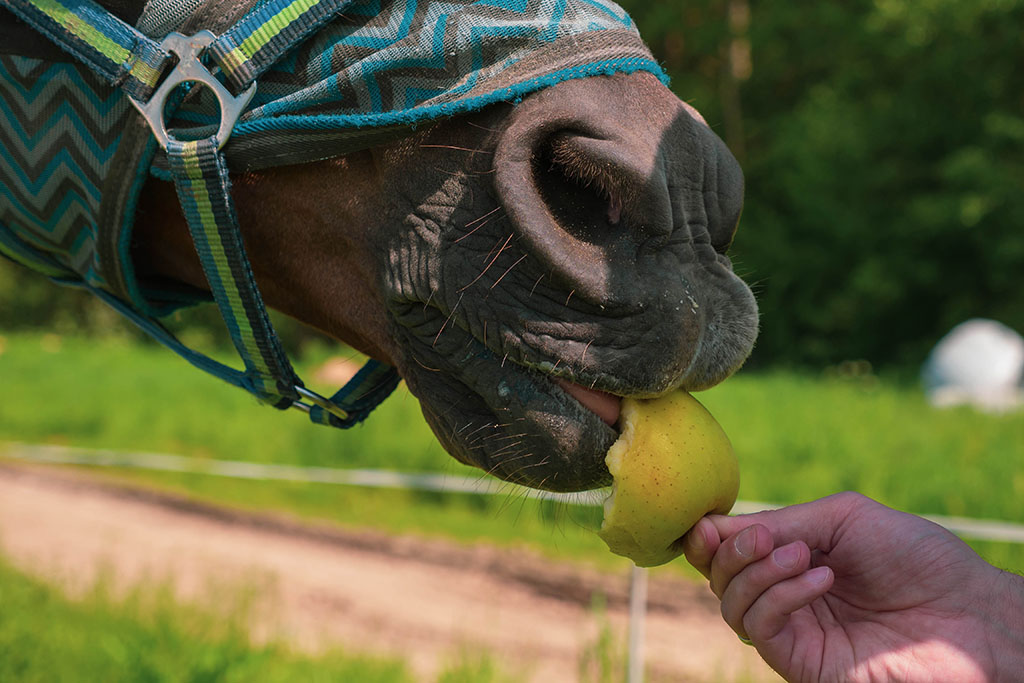
Treats should be given in moderation as part of a balanced diet, one to two treats a day is the recommended amount. As horses tend to swallow things whole without chewing, they could be at risk of choking, particularly with solid treats that don’t break up easily, such as apples, so remember to break them into bite-sized pieces – around the size of your thumbnail.
Individual Health
There are certain health conditions in horses that will affect the type, and quantity, of treats you can give them:
- Obesity – An overweight horse may need low calorie treats.
- Equine Metabolic Syndrome – These horses may need a low starch/low sugar diet.
- Hyperkaliaemic Periodic Paralysis – This is a muscle disease that can result in hypersensitivity to potassium levels in food, so fruit such as cantaloupe and bananas should be avoided.
- Dental Issues – If your horse has dental problems, or is older, then soft fruit is better than something they have to chew.
INTRODUCING FRUIT INTO YOUR HORSE’S DIET
A horse’s diet should mainly include forage, such as grass and hay, but fruit can be included as a treat. Start with small amounts and monitor your horse for any digestive upsets or change in behaviour. It’s better to give them their treats in a bowl or bucket as this discourages pushy behaviour and bad manners.
Remember to talk to your vet if you’re not sure about what kind of food you can give to your horse and be aware of choking hazards; fruits such as cherries and grapes should be cut in half to reduce the risk.
HOW TO MAINTAIN A HEALTHY FEEDING SCHEDULE
It’s important to have a feeding routine that matches their natural feeding style of little and often, and sticking to the same feeding times can reduce stress. Your horse will need access to forage at all times and have small, frequent meals – long periods without a meal could increase the risk of ulcers.
Any new food should be introduced slowly over a couple of weeks.
Horses, like any animal, love treats, and we love giving them, it can be a way of bonding with them and showing affection. Treats can also help when training, or when encouraging them to accept medication etc. But treats are meant to supplement a healthy, balanced diet, not form the bulk of it, so they should only be given in moderation, otherwise you risk causing, or aggravating, digestive issues which could result in costly horse veterinary treatment.
We all want the best for our horses, and while we can’t predict the future, we can make sure we have the right insurance in place should the unexpected happen. Our Pick ‘n’ Mix horse insurance policies make the process simple; you start with one standard benefit – Death, Theft or Straying – then personalise it with a choice of optional benefits that suit you.
Take a look at our website, or give us a call for a free, no-strings quote today.
All content provided on this blog is for informational purposes only. We make no representations as to the accuracy or completeness of any information on this site or found by following any link on this site. We will not be liable for any errors or omissions in this information nor for the availability of this information. We will not be liable for any loss, injury, or damage arising from the display or use of this information. This policy is subject to change at any time.
We offer a variety of cover levels, so please check the policy cover suits your needs before purchasing. For your protection, please ensure you read the Insurance Product Information Document (IPID) and policy wording, for information on policy exclusions and limitations.